There you have it. That’s all you’re going to find about Robert Pickton on this site.
January 2007
Monthly Archive
January 22, 2007
January 22, 2007

Bush keeps linking Saddam to al-Qaeda so it’s not surprising that Canada’s defence minister, Gord O’Connor, links the Taliban to the World Trade Centre attacks of 11 September, 2001.
“When the Taliban or Al Qaeda came out of Afghanistan, they attacked the twin towers and in those twin towers, 25 Canadians were killed,” O’Connor said to applause from a crowd in Edmonton.
Now, just to clarify things, neither O’Connor nor anyone else has any evidence that the Taliban were in on the 9/11 attacks. Among the nearly two-dozen terrorists involved, there wasn’t a single Afghan. They were mainly Saudis, all of them Arabs. The Taliban didn’t come out of Afghanistan to attack anything Gord, sorry.
What the Taliban did, or rather failed to do, was to oust al-Qaeda from Afghanistan after they had given so much help in ousting the Soviet Union. Not to make excuses, but at the time of the WTC attacks, the Taliban were locked in a civil war with the Northern Alliance and not looking to make any new enemies.
Things are different today, of course. The Taliban and al-Qaeda have bonded now that they are prepared to fight a common enemy – Karzai and us. No one’s suggesting they’re not fair game because they certainly are. They’re our enemy at the moment.
Is this a distinction without a difference? Not at all. You see, the Taliban aren’t going away anytime soon. Hamid Karzai knows that. The president of Afghanistan is constantly trying to reach an accommodation with the Taliban because Mr. Karzai understands they have to be brought into the process if there is to be lasting peace in Afghanistan.
Maybe our focus shouldn’t be on blaming the Taliban for 9/11 but on trying to find ways to drive a wedge between them and al-Qaeda. Their objectives and interests are in many ways different and it would be useful to realize that. It is al-Qaeda that quests for a return of the Caliphate, a greater Islamic empire.
Sure we have to fight the Taliban but let’s not forget that the prime target must be al-Qaeda.
January 22, 2007
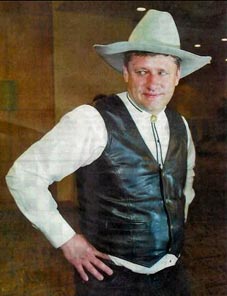
Stephen Harper has made it clear – his newfound environmentalism has limits and he draws that line at Fort Mc Murray.
He wants Canada to become a “clean energy superpower” but not at the expense of the Tar Sands cash cow or offshore oil development. In an interview in the Vancouver Province, Harper said that environmental fixes must not compromise economic growth.
That seems to mean that Harper believes that solving Global Warming begins at home. In shamelessly reviving the Liberal home energy savings subsidies without acknowledging it, we may be seeing the true face of Reform Conservative environmentalism.
It is the Tar Sands that render Alberta the worst, by far, emitter of greenhouse gases in Canada, about a third worse than the tally of the second worst emitter, much larger Ontario. If Harper isn’t ready to fight GHG emitters at the source, the rest of his initiatives are largely pandering, window dressing.
Sorry Steve, it’s going to take more than putting double-pane windows in some houses. This is going to take genuine sacrifice at every level of our society and that will compromise certain aspects of economic growth. You can’t have it both ways and it is the roll of government to lead when problems such as this loom, not skirt the issue.
We need carbon caps as a beginning Steve. It’s time to get real.
January 22, 2007

The Japanese love tuna. In fact they may love it straight into extinction.
A meeting begins today in Kobe, Japan of the world’s five biggest tuna fisheries and the opening message is that the supply of tuna is now on the brink of commercial extinction.
The Japanese love Atlantic bluefin tuna, especially for sushi, and the nation’s voracious appetite for the fish is now being made worse by other nations, particularly China, where demand has skyrocketed.
The message at the tuna fisheries management conference is that there is an urgent need to restrict quotas if the stocks are going to survive. Even if quotas are imposed, enforcement remains a huge problem. There’s a lot of money to be made in bluefin tuna, enough that there is a large, illegal fishery. Bluefins are giants of the sea that can grow to 1,100 pounds. The Japanese admit to overfishing but blame it on poor communication with their fishing fleet, not poaching. Yeah, sure.
January 22, 2007

It’s the great, rarely mentioned threat facing the Third World – the exhaustion of freshwater resources and the crippling of the world’s food supply that it is already causing.
No, this isn’t about Global Warming specifically but they are inter-related.
I’ve written a few posts on this problem. Here’s a quick summary of what’s happening. Four-fifths of our usable freshwater is underground, in aquifers. As the earth’s population burgeoned over the past century, we tapped those underground stocks to get the massive amounts of water necessary for irrigation. We went along contentedly breeding people by the billions and sucking out more water to grow stuff necessary to feed them. We didn’t pay much attention to what we were doing underground, to see that we were draining these aquifers much faster than they could ever be replenished. We acted like global morons and we’ve created a hell of a mess.
Now Global Warming is making the problem worse. It is shifting rainfall patterns and making them erratic. Some places are enduring droughts. Others are getting increased precipitation. Sometimes the freshwater is brought via powerful storms creating floods which are massive amounts of freshwater in a form that is utterly useless to our needs.
The good news is that the planet still has as much water as ever. It doesn’t get destroyed, it merely gets transformed. It can go from rivers into oceans. It can go into the ground. It can go into the air as water vapour or it can freeze into ice. The problem is we need enough of that water in an accessible state and in the right places for our purposes. More rainfall in northern Canada doesn’t help sub-Saharan Africa one bit.
As I mentioned just a couple of days ago, there’s another snag. Some of the aquifers we’ve become dependent upon are “fossil” aquifers – ancient reservoirs of water that don’t get replenished in the regular, water cycle. When you tap these dry, they’re going to remain dry, for all practical purposes, forever. When that ancient water is exhausted, these lands go back to their natural state – either barren grasslands or desert. Either way, they’re out of agricultural production.
Which brings us to today’s warning from Jeffrey Sachs of the UN Millenium Project. “In 2050 we will have 9 billion people and average income will be four times what it is today. India and China have been able to feed their populations because they use water in an unsustainable way. That is no longer possible,” he said.
The US academic said that the mechanisms of shrinking water resources are not well understood. “We need to do for water what we did for climate change. How do we recharge aquifers? What about ground water use? There’s no policy anywhere in place at the moment.”
How to recharge aquifers? That, indeed, is a huge problem. Some of them, the fossil type, can’t be recharged. The others conceivably can be recharged but from what? If they’re running dry, agriculture will become dependent on surface water – rain water. Unfortunately Sachs’ remarks are bereft of possible answers.
January 22, 2007

This sounds like a fantasy hatched in the Oval Office. The commanding NATO general in Afghanistan, British General David Richards, figures the Taliban can be defeated in just one more year. That’s right folks, we can destroy the Taliban if we get more money and more troops for a surge of our own.
Richards said, “I am concerned that Nato nations will assume the same level of risk in 2007, believing they can get away with it. They might, but it’s a dangerous assumption to believe the same ingredients will exist this year as they did last. And anyway a stabilised situation is not a good enough aim. We should and can win in Afghanistan but we need to put more military effort into the country … We must apply ourselves more energetically for one more year in order to win.”
He also listed a few other pre-conditions to victory:
-The west must stop trying to impose western solutions on an Islamic society at a very early stage of development.
– Afghanistan’s president, Hamid Karzai, must step up the country’s efforts to root out corruption.
– Relations between Afghanistan and Pakistan governments had to improve. “Currently they are passing in the night and the climate is not good,” he said.
– Civilian agencies, including Britain’s international development department, had to speed up reconstruction efforts.
It’s the old one about “the Devil being in the details.” So, if we put a real thumping on the Taliban for another year and speed up reconstruction and Afghanistan and Pakistan get into an anti-Taliban alliance and Karzai purges his government and security services of rampang corruption and we give up our silly notions of bringing Western democracy to Afghanistan – we could win.
It’s a pretty tall order that General Richards prescribes and there seem to be some major hurdles facing his collateral conditions. But yes, if we can batter the Taliban senseless and get Pakistan onside and rid the government and police of corruption and scrap the idea of secular democracy and women’s rights, we just might win – something.
Richards said the battle for the hearts and minds of villagers remains undecided and added that Afghans, “need to have faith in the prowess of the side they back”. He added: “They just will not take the risk of backing the wrong side.”
January 21, 2007
He enlists for life. He will follow any order. He’ll pick up a roadside bomb and tear it apart. Killing doesn’t bother him at all. If he’s wounded, he’s really easy to patch up and if he’s killed nobody cares very much. He is completely immune to Post Traumatic Stress Disorder and he’ll never expect a pension or veterans’ benefits. He is warfare without conflict.
“He” is actually “it”, the latest variant of combat robot currently under devlopment in the United States. The military is hoping that “It” will be the solution to its ultimate nemesis – the people back home and their angry refusal to accept friendly casualties.
Just over 3,000 American military personnel have died in Iraq. Back in grandpa’s army, that was just a bad day at war and the folks at home were pretty much resigned to it. That was then, this is now and the current generation with their Ipods and Blackberries want bloodless wars. If they don’t get what they want they will elect leaders who will do their bidding and there goes your war right out the window.
Harper’s magazine this month has a feature article on the robot army of the near future now under development in the US. A host of new companies are springing up in competition with the old stalwarts, names like Raytheon and Boeing, and there are billions and billions up for grabs.
Robot weapons aren’t new. Primitive models have been around since the First World War. Their numbers have been limited mainly because their capability was limited. They were invariably remote control, often via cables, and had no capacity to sense much less think. Those days are gone.
The new generation of robotic weapons will be able to locate, sense and identify targets and to attack, sometimes autonomously, with precision guided munitions. If that sounds like something out of “The Terminator” well it is, sort of.
Unmanned aerial vehicles, unmanned ground vehicles – their arrival was inevitable, their attraction irresistable. There is, however, a dark dimension to this. Are we ready for warfare by software? Will killing matter anymore if it goes unseen, unmentioned? What is the value of the lives of our enemies, real or just perceived, or the innocent civilians for whom war will be anything but bloodless? When the casualties of war become mere entries in a database, will we lose our revulsion at killing? Will we become indifferent to waging wars?
How far has this gotten in development? Well the manufacturers are already staging conventions to show off their wares to the military types. That’s pretty far down the pike.
January 21, 2007

Hillary Clinton is on a roll and she’s following the example of the Iron Lady herself. That’s right, Clinton wants to emulate the image of Margaret Thatcher – strong, decisive, with a clear vision of world affairs.
Clinton may turn out to be the most conservative candidate in the next election – of either party.
In an interview with the Times of London, Hillary’s campaign manager, Terry McAuliffe, said there are similarities:
“‘Their policies are totally different but they are both perceived as very tough,’ said McAuliffe. ‘She’s strong on foreign policy. No matter what people say, you still have to check that box on national security. People have got to know you are going to keep them safe.’
Their policies are totally different? We won’t know that until Clinton reads the polls and finds out which policies will best serve her ambitions. As for tough, that she is – no question.
“‘She has the name recognition, the money, the glitz that goes with all this — she’s got it all,’ said Terry McAuliffe, her campaign chairman, in an interview with The Sunday Times. ‘She has got a great case to make about why she should be president of the United States.’
Name recognition, money and glitz – yeah, that pretty much covers all the bases to qualify for president.
The problem is that Americans, while they may be willing to elect a Democrat, even a woman, to the White House, still won’t accept a “liberal.” That means the eventual winner will have to stand as a conservative.
David Gergen presented a telling example of this when he appeared on Charlie Rose’s show a couple of months back. Gergen, who is now at the Kennedy School at Harvard, served four presidents, beginning with Richard Nixon. He noted that a Nixon, who took some initiatives to aid the poor and minorities, could not even hope to get elected today because he would be viewed as too liberal. Nixon, a liberal? Yes, that’s how far to the right the political centre has shifted in the US.
Hillary may lead the push for universal medicare but that path has already been paved by Massacheusetts and California so she would have a much easier time of it than she encountered when her husband was president.
Still, Hillary will have to focus on “guy issues” lest she be seen as soft or a leftie. She will, in effect, be running against George W. Bush. On major questions such as global warming, the environment and the Third World, Clinton won’t lead, she’ll follow the polls and American self-interest.
Unfortunately the world doesn’t have the time for a president who is focused on going back to refight the wars that George Bush screwed up. What’s needed isn’t a “better” but backward vision but a fresh, forward vision that clearly sees the issues that will need to be addressed in the coming generation. I don’t think Hillary Clinton is up to that job, she’s not what the world needs now.
January 21, 2007
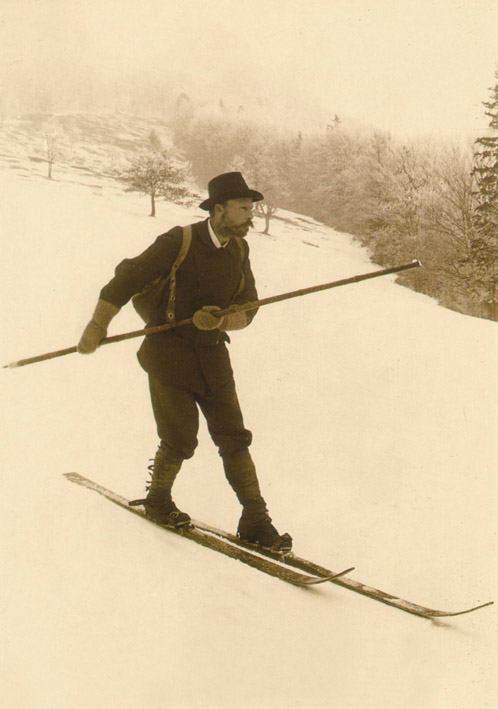
Good news for some, bad news for others. It’s bad news for European ski resorts, good news for Canadian ski resorts like Whistler. Good news for wealthy European skiers, bad news for ordinary Canadians.
Europe’s alpine ski resorts are in danger of running out of snow. That’s the conclusion of a report by the Organization of Economic Co-operation and Development (OECD). Global warming will put an end to all but the highest of European ski resorts.
On the other hand, North America’s top resorts in the western mountains are doing just fine – for snow, that is. That’s already caused ads for places like Whistler to appear in newspapers in Europe. The message? Want to ski? Head to Canada and don’t forget to bring your wallet. Locals who once skied places like Whistler are going to find packed slopes and higher prices brought by increased demand.
“Shardul Agrawala, author of ‘Climate Change in the European Alps’, said the report shows the impact of global warming is already very real. ‘There tends to be a view that climate change is decades away and that it will affect faraway places. But if you look at the Alps, whose recent warming has advanced at three times the average world rate, you can tell it is happening already.'”
January 21, 2007

BP, British Petroleum, is about to take another hit to its reputation.
The US Chemical Safety Board’s report into a March, 2005 refinery explosion at BP’s Texas City refinery that claimed 15 lives, accuses BP of complacency and disregard for inherent danger.
CSB chairman, Carolyn Merritt, told The Observer that, “…the impact of cost-sutting on safety would be central in the CSB report,” and maintains there is a causal connection between relaxed maintenance and the explosion.
BP’s response demonstrates PR spin at its finest. A BP spokesman said the company invested heavily in maintenance. BP’s spending on its five US refineries increased on average by 10 per cent a year from 2000 to 2005. Wow, 10 per cent a year for five consecutive years. That’s a pretty big increase in the maintenance budget. Isn’t it?
Well, maybe it wasn’t that great. “…CSB officials point to a history of cost-cutting at Texas City: from 1992 to 1998 maintenance spending fell by 41 per cent. When the figures are extended to the eight years between 1992 and 2000 the fall was 84 per cent. They add that reports commissioned by BP said clearly that funding was inadequate, but attempts to increase spending were not effective.”
Kind of puts a different spin on it when you hear both sides, doesn’t it?
 The Mound of Sound