January 2007
Monthly Archive
January 30, 2007

It speaks volumes that the Reform Conservatives are ready to spend upwards of a million dollars of their own cash to slam Stephane Dion. They’ve singled out the Liberal leader with nary a word for Jack Layton or Gilles Duceppe. Dion, in their eyes, stands alone.
The Harpies are obviously bent on using paid ads to neutralize Dion on the environmental front. Why should they have to pay if (a) they’re the government and (b) they’ve got a legitimate point to make?
Put it down to fear. They’re afraid that Stephane Dion will take control of the foremost issue of concern to the Canadian public. Why should they be afraid? Ah, there’s the question. Are they afraid because Dion is some sort of alchemist who controls knowledge they don’t have? Not likely because he doesn’t. Are they afraid because the opposition leader may expose their feint on “so called greenhouse gases” for what it is? Bingo.
I heard an ad today in which some “hip” young people were supposedly awed by Stephen Harper’s initiative for renewable energy – ethanol. Of course the voices were those of actors and that much was obvious. What was less obvious is Harper’s resolute intention not to let any of this environmental crap get in the way of the “almighty dollar” value of the Tar Sands. That’s his Achilles’ Heel and that’s why he’s so intent on attacking Dion.
Sorry Steve, you’re still trying to protect the Klan while claiming you’re all about civil rights. I guess, given your agenda, attacking someone else is an awful lot better than doing something yourself. You’ve seen your idol, George Bush, use this bait and switch routine for years. Creep.
You had better watch out, Steve. We’re not nearly as gullible as the Nascar crowd down south. In fact we can already smell the scent of fear.
January 29, 2007

On the weekend I watched the 1939 classic “Gunga Din” starring Carey Grant, Victor McLaglen and Douglas Fairbanks Jr., a weird comic drama about British troops battling a diabolical cult of murderous Thugees in India.
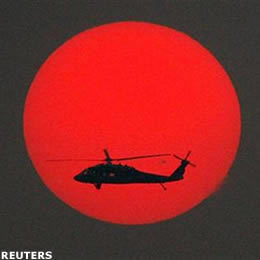
About the same time Gunga Din was being aired, Iraqi security forces, backed by US tanks and helicopters, were battling a murderous cult of their own, a messianic Shia sect calling itself “Soldiers of Heaven.” It seems the cult’s 40-year old leader styled himself as the “Mahdi”, an Islamic prophet who is destined to rise again and judge good from evil.
The apocalyptic insurgents were hit just as they were preparing to ambush fellow Shiites about to celebrate the holiest day in the Shia Muslim calendar.
It is reported that 300 Soldiers of Heaven have been dispatched to their new home and 100 arrested. Just plain weird.
January 29, 2007

It could make you a bit squeamish but you can produce safe drinking water from sewage and for residents of Australia’s Queensland state that may soon be what comes out of their taps.
Australia has been suffering an extended drought and Queensland Premier Peter Beattie told the Times of London there are no other options:
“Falling dam levels had left him with a ‘no choice decision’ , Mr Beattie said, and the state had to go ahead with plans for recycled water, rather than wait until a planned public referendum on the matter which had been scheduled for March.
“‘I think in the end, because of the drought, all of Australia is going to end up drinking recycled purified water,’ he said.
“‘These are ugly decisions, but you either drink water or you die.There’s no choice. It’s liquid gold, it’s a matter of life and death,’ he told local radio.
“Referring to residents in Singapore, Washington and Southern California who he said drank recycled water, he added: ‘It’s not like we are part of a freak show – the rest of the world is doing this.’
“The waste is typically recycled using a combination of reverse osmosis and disinfection with ultraviolet radiation. Through the reverse osmosis process, water is forced through very fine membranes that filter out salts and other matter but let water molecules pass through.”
Recycling is just one of many emerging technologies intended to relieve water shortages. Another is the waterless toilet. It works, just don’t ask how.
Now that should make you grateful to be Canadian and give you something to think about the next time someone gets the bright idea to export our freshwater.
January 29, 2007

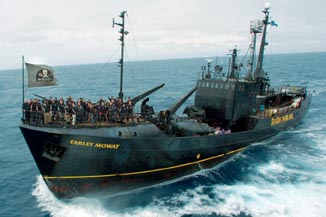
An intriguing hunt is on in the Antarctic’s Southern Ocean. Actually there are two hunts underway on that ocean. It’s where Japanese ships are hunting whales and where the Sea Sheperd’s “Farley Mowat” is on the hunt for the Japanese whalers.
The government of New Zealand has released video taken from a RNZAF Hercules of the whalers in action, harpooning and butchering whales but won’t say where the ships are at.
Sea Shepherd leader, Paul Watson, believes the US Naval Intellingence is helping the Japanese elude Greenpeace and Sea Shepherd ships. That’s led Watson to post a $25,000 bounty for the co-ordinates of the whaling fleet.
Watson has threatened to ram and sink the Japanese vessels if he can only find them.
January 29, 2007

One thing about being acclaimed the “oldest person in the world” is knowing that you won’t be for very long. There have been a lot of “oldest person,” “oldest man,” “oldest woman” lately as the titles keep changing hands in the only way these titles can change hands.
However 114-year old Emma Tillman scored a record that may have some real staying power. She’s the shortest reigning world’s oldest known living person. Emma, a child of former slaves and herself Katherine Hepburn’s former nurse, held her title for only four days before she “passed on” the honour to 114-year-old Yone Minagawa of Fukuoka, Japan.
A Telegraph reporter who tried to reach Ms. Minagawa was told by a nurse that she’d already gone to sleep.
January 29, 2007

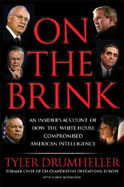
Tyler Drumheller is speaking out – a little. The former Chief of the CIA’s European Division spoke with Spiegel Online about the events leading up to the conquest of Iraq.
SPIEGEL: The renditions program saw the kidnapping of suspected Islamist extremists to third countries. Were you involved in the program?
Drumheller: I would be lying if I said no. I have very complicated feelings about the whole issue. I do see the purpose of renditions, if they are carried out properly. Guys sitting around talking about carrying out attacks as they smoke their pipes in the comfort of a European capital tend to get put off the idea if they learn that a like-minded individual has been plucked out of safety and sent elsewhere to pay for his crimes.
SPIEGEL: We disagree. At the very least, you need to be certain that the targets of those renditions aren’t innocent people.
Drumheller: It was Vice President Dick Cheney who talked about the “dark side” we have to turn on. When he spoke those words, he was articulating a policy that amounted to “go out and get them.” His remarks were evidence of the underlying approach of the administration, which was basically to turn the military and the agency loose and let them pay for the consequences of any unfortunate — or illegal — occurences.
Drumheller: Every responsible chief in the CIA knows that the more covert the action, the greater the need for a clear policy and a defined target. I once had to brief Condoleezza Rice on a rendition operation, and her chief concern was not whether it was the right thing to do, but what the president would think about it. I would have expected a big meeting, a debate about whether to proceed with the plan, a couple of hours of consideration of the pros and cons. We should have been talking about the value of the target, whether the threat he presented warranted such a potentially controversial intervention. This is no way to run a covert policy. If the White House wants to take extraordinary measures to win, it can’t just let things go through without any discussion about their value and morality.
SPIEGEL: Perhaps the White House wanted to gloss over its own responsibility.
Drumheller: Let me give you a general thought: From the perspective of the White House, it was smart to blur the lines about what was acceptable and what was not in the war on terrorism. It meant that whenever someone was overzealous in some dark interrogation cell, President (George W.) Bush and his entourage could blame someone else. The rendition teams are drawn from paramilitary officers who are brave and colorful. They are the men who went into Baghdad before the bombs and into Afghanistan before the army. If they didn’t do paramilitary actions for a living, they would probably be robbing banks. Perhaps the Bush Administration deliberately created a gray area on renditions.
SPIEGEL: But it was your agency that was coming up with all the wrong information concerning Saddam Hussein’s alleged weapons of mass destruction. To what degree is the intelligence community responsible for the disaster?
Drumheller: The agency is not blameless and no president on my watch has had a spotless record when it comes to the CIA. But never before have I seen the manipulation of intelligence that has played out since Bush took office. As chief of Europe I had a front-row seat from which to observe the unprecedented drive for intelligence justifying the Iraq war.
SPIEGEL: There are more than a few critics in Washington who claim that the Germans, because of Curveball, bear a large part of the repsonsibility for the intelligence mess.
Drumheller: There was no effort by the Germans to influence anybody from the beginning. Very senior officials in the BND expressed their doubts, that there may be problems with this guy. They were very professional. I know that there are people at the CIA who think the Germans could have set stronger caveats. But nobody says: “Here’s a great intel report, but we don’t believe it.” There were also questions inside the CIA’s analytical section, but as it went forward, this information was seized without caveats. The administration wanted to make the case for war with Iraq. They needed a tangible thing, they needed the German stuff. They couldn’t go to war based just on the fact that they wanted to change the Middle East. They needed to have something threatening to which they were reacting.
SPIEGEL: The German government was convinced that “Curveball” would not be used in the now famous presentation that then US Secretary of State Colin Powell gave in 2003 before the United Nations Security Council.
Drumheller: I had assured my German friends that it wouldn’t be in the speech. I really thought that I had put it to bed. I had warned the CIA deputy John McLaughlin that this case could be fabricated. The night before the speech, then CIA director George Tenet called me at home. I said: “Hey Boss, be careful with that German report. It’s supposed to be taken out. There are a lot of problems with that.” He said: “Yeah, yeah. Right. Dont worry about that.”
SPIEGEL: But it turned out to be the centerpiece in Powell’s presentation — and nobody had told him about the doubts.
Drumheller: I turned on the TV in my office, and there it was. So the first thing I thought, having worked in the government all my life, was that we probably gave Powell the wrong speech. We checked our files and found out that they had just ignored it.
Drumheller: The policy was set. The war in Iraq was coming and they were looking for intelligence to fit into the policy. Right before the war, I said to a very senior CIA officer: “You guys must have something else,” because you always think it’s the CIA. “There is some secret thing I don`t know.” He said: “No. But when we get to Baghdad, we are going to find warehouses full of stuff. Nobody is going to remember all of this.”
SPIEGEL: In your book, you mention a very high-ranking source who told the CIA before the war that Iraq had no large active WMD program. It has been reported that the source was Saddam Hussein’s foreign minister, Naji Sabri.
Drumheller: I’m not allowed to say who that was. In the beginning, the administration was very excited that we had a high-level penetration, and the president was informed. I don’t think anybody else had a source in Saddam’s cabinet. He told us that Iraq had no biological weapons, just the research. Everything else had been destroyed after the first Gulf War. But after a while we didn’t get any questions back. Finally the administration came and said that they were really not interested in what he had to say. They were interested in getting him to defect. In the end we did get permission to get back to the source, and that came from Tenet. I think without checking with the White House, he just said: “Okay. Go ahead and see what you can do.”
SPIEGEL: Should you have pressed harder?
Drumheller: We made mistakes. And it may suit the White House to have people believe in a black and white version of reality — that it could have avoided the Iraq war if the CIA had only given it a true picture of Saddam’s armaments. But the truth is that the White House believed what it wanted to believe. I have done very little in my life except go to school and work for the CIA. Intellectually I think I did everything I could. Emotionally you always think you should have something more.
January 29, 2007

“We will not allow hegemony of a hostile regime to have power over this area.”
That warning came from US ambassador to Iraq, Zalmay Khalizad this weekend. His remarks were directed at Tehran and prompted by Iran’s rapidly growing, and probably inevitable, influence in Iraq.
The US is trying to chaperone Iraq, keeping its courtship by Iran under strict control lest it lead to hanky-panky. Howevere Shiite-controlled Iraq is showing signs that it rather likes Shiite-Iran’s attentions.
George Bush has issued an order to US troops authorizing them to kill or capture Iranian agents in Iraq who may be doing things hostile to the American forces. Does this mean it’s open season on Iranians who have the bad luck to get swept up by GI’s? Hard to say.
One thing is clear. If Washington was hoping to intimidate Iran, it’s not working. Tehran has since announced initiatives to train Iraqi military forces and to undertake reconstruction projects that have fared poorly under the occupation. The Baghdad government seems to be welcoming the offers from one of America’s designated “Axis of Evil” charter members.
“The increasingly common arrangement for sick or wounded Iraqis to receive treatment in Iran is just one strand in a burgeoning relationship between these two Persian Gulf countries. Thousands of Iranian pilgrims visit the Shiite holy cities in southern Iraq each year. Iran exports electricity and refined oil products to Iraq, and Iraqi vendors sell Iranian-made cars, air coolers, plastics and the black flags, decorated with colorful script, that Shiites are flying this week to celebrate the religious holiday of Ashura.
“Each day, Iran provides 1,000 tons of cooking gas, about 20 percent of the Iraqi demand, and 2 million liters of kerosene. Iran exports electricity through Iraq’s Diyala province and plans to quadruple the amount with new projects, Iraqi officials say.
“Iran has also extended a $1 billion line of credit to Iraq to help fund reconstruction and rebuilding. When Iraqi President Jalal Talabani and his delegation of ministers visited Iran in November, he asked for more help and said Iraq ‘would like to expand our relations in every field with the Islamic Republic of Iran.’
“‘The economic power between the two countries, it’s enormous,’ said Hassan Kazemi Qomi, Iran’s ambassador to Iraq. ‘We can help them in technical issues and engineering. We have a lot of experience in building roads and airports.’
“Iran has driven a wedge between Iraq and the United States. Last month, when U.S. troops seized two Iranian officials inside the Baghdad compound of Abdul Aziz al-Hakim, the leader of SCIRI, the Iraqi government intervened and the United States freed them. After U.S. troops seized five more Iranian officials from the liaison office in Irbil, the Iraqi government again appealed for their release — so far unsuccessfully — saying the men worked in an approved office providing consular services.
“Some analysts say the violence and instability in Iraq attract more Iranian involvement, not less, as Iran positions itself to be on the winning side of a sectarian war.
“‘The whole Gulf system is turned upside down, and everybody is trying to figure out how they situate themselves in it,’ said Ray Takeyh, an Iran expert at the Council on Foreign Relations, referring to traditional relationships in the Persian Gulf region. Iranian support is ‘part of the program of strengthening the Shia community to resist and expand its influence, and become a successful combatant in a civil war.'”
January 29, 2007

I just thumbed through Gwynne Dyer’s 2005 book, “With Every Mistake.” It’s a compendium of his newspaper columns going back to the attacks of 11 September, 2001 that launched us all on the Global War Without End on Terror. If you haven’t read it yet, it’s still a very worthwhile read.
In fact, a lot of Dyer’s predictions from those early days have turned out to be eerily prescient. He made the case for what he thought out to be done and what would happen if it wasn’t. We didn’t and, sure enough, it happened.
The Taliban collapsed in November, 2001, when American airpower tipped the balance in the stalemated civil war between the Taliban and the Northern Alliance. It was pushing on an open door. Both sides were exhausted, resorting to static, trench warfare. America wasn’t prepared for what happened.
On 14 November, 2001, Dyer wrote a piece entitled “Time to Stop” –
“Four out of five: Mazar-i-Sharif, Herat, Kabul and Jalalabad. All but one of Afghanistan’s major cities have been lost by the Taliban and captured by the Northern Alliance in less than a week, and the last, Kandahar, is likely to fall at any time. Neither Washington nor anyone else expected so sudden a collapse. So the burning question at the Pentagon, in the National Security Council, in all the decision-making centres of the United States and other members of its anti-terrorist coalition, is what to do next. The answer is to stop.”
“Stop the bombing, above all. It has achieved a lot by breaking up the Taliban’s fixed defences and demoralizing its troops, but it can do little more for you now that they are pulling back into the hills and reverting to guerilla warfare.
“…what is the point in just bombing the rural areas of southern Afghanistan? You will kill lots of innocent civilians and drive he rest back into the embrace of the Taliban without accomplishing a single useful thing. Surely the objective now must be to create a competent and broadly based Afghan government as fast as possible, and let it do the work of tracking down the Taliban diehards and ‘foreign guests’ who linger in the hills.
“As for the US and other Western troops, they should stay just long enough to stabilize the situation and persuade the Northern Alliance that it must share power with other groups. Then they should be replaced with a robust, UN-backed force made up entirely of Muslim troops that stays until the new government is securely on its feet.
“Do all this and you might walk away from Afghanistan with a success on your hands. But remember that you have been very, very lucky, and don’t get overconfident. Above all, don’t let anybody talk you into attacking Iraq.”
Imagine where we would be today if the White House had followed this advice instead of the lunacy pitched by the neo-cons and so warmly welcomed by Cheney, Rumsfeld, Wolfowitz and the rest of that pack? Imagine.
January 29, 2007

It’s taken more than five years to come up but, finally, John Hopkins professor David Bell writing in the LA Times has asked it, “Was 9/11 really that bad?”
“IMAGINE THAT on 9/11, six hours after the assault on the twin towers and the Pentagon, terrorists had carried out a second wave of attacks on the United States, taking an additional 3,000 lives. Imagine that six hours after that, there had been yet another wave. Now imagine that the attacks had continued, every six hours, for another four years, until nearly 20 million Americans were dead. This is roughly what the Soviet Union suffered during World War II, and contemplating these numbers may help put in perspective what the United States has so far experienced during the war against terrorism.
“Has the American reaction to the attacks in fact been a massive overreaction? Is the widespread belief that 9/11 plunged us into one of the deadliest struggles of our time simply wrong? If we did overreact, why did we do so? Does history provide any insight?
“…although Islamist extremists can certainly do huge amounts of harm around the world, it is quite different to suggest that they can threaten the existence of the United States.
“Yet a great many Americans, particularly on the right, have failed to make this distinction. For them, the “Islamo-fascist” enemy has inherited not just Adolf Hitler’s implacable hatreds but his capacity to destroy. The conservative author Norman Podhoretz has gone so far as to say that we are fighting World War IV (No. III being the Cold War).
“Even if one counts our dead in Iraq and Afghanistan as casualties of the war against terrorism, which brings us to about 6,500, we should remember that roughly the same number of Americans die every two months in automobile accidents.
“So why has there been such an overreaction? Unfortunately, the commentators who detect one have generally explained it in a tired, predictably ideological way: calling the United States a uniquely paranoid aggressor that always overreacts to provocation.
“Yet as the comparison with the Soviet experience should remind us, the war against terrorism has not yet been much of a war at all, let alone a war to end all wars. It is a messy, difficult, long-term struggle against exceptionally dangerous criminals who actually like nothing better than being put on the same level of historical importance as Hitler — can you imagine a better recruiting tool? To fight them effectively, we need coolness, resolve and stamina. But we also need to overcome long habit and remind ourselves that not every enemy is in fact a threat to our existence.”
January 29, 2007

Politicians are supposed to be political, trying to win votes instead of losing them. One way you do that is by not insulting half of your population. I guess Japan’s health minister didn’t get that memo.
Hakuo Yanagisawa wants Japan’s women to pick up the pace from the record low rate of 1.26 children per woman in 2005 to a more robust rate of 2.1 children per women needed to keep Japan’s population stable. Fair enough but you just don’t have to put it quite this way:
“The number of women aged between 15 and 50 is fixed. Because the number of birth-giving machines and devices is fixed, all we can do is ask them to do their best per head … although it may not be so appropriate to call them machines.”
You see his instincts were sort of right, but still you don’t call women who can vote “birth-giving machines.” Fertility ovens? No. Natal nests? I don’t think so. How bout “conception co-ordinators”? Yeah, that’s got a nice touch.
« Previous Page — Next Page »







 The Mound of Sound