January 2007
Monthly Archive
January 31, 2007

For more than a year there have been credible accounts of American special forces operating within Iran, scouting Iran’s nuclear facilities and engaging Iranian dissidents.
Now, according to Time, the Iranians may be playing the same game against the Americans in Iraq. Former CIA agent Robert Baer asks, “Are the Iranians out for revenge?” and speculates they are indeed:
“The speed and level of chaos in Iraq is picking up fast. An apocalyptic cult came uncomfortably close to taking Najaf, one of Shi’a Islam’s most holy cities, and murdering Grand Ayatollah Sistani. Sistani is the neo-cons’ favorite quietist Shi’a cleric, the man who was supposed to keep Iraq’s Shi’a in line while we went about nation building. And then, on Sunday, Iran’s ambassador to Baghdad told the New York Times that Iran is in Iraq to stay, whether the Bush Administration likes it or not.
“And that’s not the worst of it. American forces still hold five members of Iran’s Islamic Revolutionary Guard Corps. Arrested by American forces in Erbil on Jan. 11, the Administration has accused the five IRGC members of helping the Iraqi opposition kill Americans.”
Baer reports that, within Iraq, there is plenty of speculation that the commando-style raid in Karbala on January 20th in which five American soldiers were kidnapped and later found executed may have been the work of Iran’s Islamic Revolutionary Guard Corps or IRGC. The theory goes that the Iranians killed the five Americans in retaliation for the arrest by the Americans of five IRGC members in Erbil days earlier.
“…we should count on the IRGC gearing up for a fight. And we shouldn’t underestimate its capacities. Aside from arming the opposition, the IRGC is capable of doing serious damage to our logistics lines. I called up an American contractor in Baghdad who runs convoys from Kuwait every day and asked him just how much damage.”Let me put it this way,”he said.”In Basra today the currency is the Iranian toman, not the Iraqi dinar.”He said his convoys now are forced to pay a 40% surcharge to Shi’a militias and Iraqi police in the south, many of whom are affiliated with IRGC.
“Mindful of the spreading chaos in Iraq, President Bush has promised not to take the war into Iran. But it won’t matter to the IRGC. There is nothing the IRGC likes better than to fight a proxy war in another country.”
January 31, 2007

There’s an uproar at Southern Methodist University in suburban Dallas and it has George Bush’s name all over it.
The university has been selected as the site of a multi-million dollar complex that will house the George W. Bush Presidential Library, museum and thinktank. It seems a lot of people on campus think the idea stinks.
“‘Given the record of this administration in deeply dividing our country, and bringing down the ire of the international community on the United States, it seems a poor decision to give a permanent place on campus for what could become a bully pulpit for the Bush administration to defend its neo-conservative policies,’ says William McElvaney, an ordained Methodist minister and retired professor, who has been among the most vocal protesters.
“The protest, which has spread from campus to a section of the Methodist clergy, has led to a national debate on one of the stranger traditions of the American presidency – that former denizens of the White House play a leading role in determining their own place in history.”
January 31, 2007

Hard as this may be to believe, it may be true. From The Guardian:
“An English coroner’s court has received evidence that “rogue” American pilots attacked a British convoy in southern Iraq in 2003.
“Staff Corporal Ashley Bell said there had been a flash as the first attack started. He had immediately radioed forward air control with the “Stop, stop, stop” instruction but had been told the planes were being flown by “rogue US pilots”.
“‘[The controller] could not contact the US pilots because they had switched frequencies and were talking to each other.’
“Soldiers in the five-vehicle convoy released smoke canisters to identify them to friendly pilots. The smoke was visible as one of the planes returned at low level and attacked a second time.
“Despite requests by the coroner and the British government, the pilots of the US planes that shot Corporal Hull have never been publicly named and will not attend the inquest.”
January 31, 2007
It’s dichloroacetate and it’s been used for years to treat metabolic disorders.
New Scientist magazine reports that a team from the University of Alberta has found that DCA has an astounding effect on many cancers, including lung, breast and brain cancers. Best of all, there’s no patent on it so it can be produced cheaply.
http://www.newscientist.com/channel/health/mg19325874.700-cheap-safe-drug-kills-most-cancers.html
DCA is said to defeat cancer cells by switching off their immortality but doesn’t affect healthy cells and has been proven to be “relatively” safe.
The explanation of just how DCA works is a bit complex so I’ve included a link to the New Scientist article.
January 31, 2007
The Democrats held their first investigative hearing since taking control of Congress and what they heard wasn’t very flattering to the Bush regime.
The hearing was to examine the role of the White House in shaping the US government’s position on global warming and its efforts to control the government’s scientists. The evidence they got plainly showed that the fix was in.
It appears there may have been an orchestrated campaign to mislead the public about climate change,” said Rep. Henry Waxman, D-Calif. Waxman is chairman of the Oversight and Government Reform Committee and a critic of the Bush administration’s environmental policies, including its views on climate.
At the House hearing, two private advocacy groups produced a survey of 279 government climate scientists showing that many of them say they have been subjected to political pressure aimed at downplaying the climate threat. Their complaints ranged from a challenge to using the phrase “global warming” to raising uncertainty on issues on which most scientists basically agree, to keeping scientists from talking to the media.
January 30, 2007

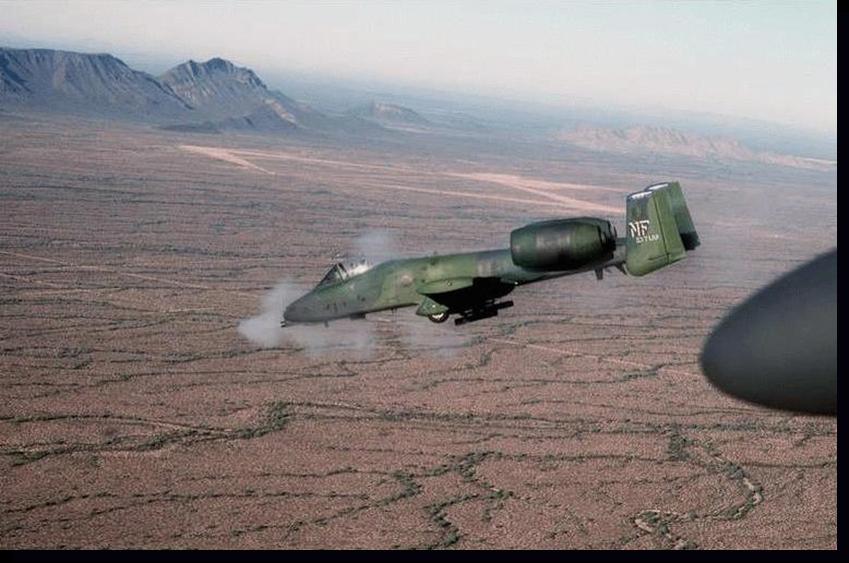
It took a wire service investigation to wake them up but the Pentagon has finally halted all sales of parts from its surplus fleet of F-14s.
The US Department of Defense moved after the Associated Press revealed how buyers for Iran, China and other countries were exploiting gaps in security to acquire sensitive military equipment.
Legislation has now been introduced in the senate to ban all sales of F-14 parts. The US Navy recently retired its F-14s. The only other nation that has them is, why, Iran. Let’s see, if there’s only one country operating this aircraft, who might be wanting the spares? Could it be – Iran?
January 30, 2007

While we are fighting for our honour, we still open the door for talks and negotiations with our enemy who is after our annihilation and is shedding our blood.
That was Afghanistan president Hamid Karzai acknowledging that he’s still making peace overtures to the Taliban. What’s he up to?
NATO and US forces are in Afghanistan battling the Taliban, even promising to defeat the Taliban, and yet Karzai is extending the offer of political accommodation to this same Taliban.
If Karzai is making these overtures now, why would the Taliban not assume there’s something better to be had, especially if they can stage a real show of strength this summer? By all indications this will be a very challenging spring and summer as a coalition of insurgents led by the Taliban try to topple the Kabul government.
What does Karzai know that we don’t?
January 30, 2007

When George Bush needlessly conquered Iraq he unleashed the dark genie of Iran unto the Middle East. According to the Washington Post, America’s Arab allies are quick to blame America:
“‘The United States is the first to be blamed for the rise of Iranian influence in the Middle East,’ said Khaled al-Dakhil, a Saudi writer and academic. ‘There is one thing important about the ascendance of Iran here. It does not reflect a real change in Iranian capabilities, economic or political. It’s more a reflection of the failures on the part of the U.S. and its Arab allies in the region.’
“Iranian officials — emboldened but uneasy over nuclear-armed neighbors in Israel and Pakistan and a U.S. military presence in the Gulf, Iraq and Afghanistan — have warned that they would respond to an American attack on Iran’s facilities.
“‘Iran’s supporters are widespread — they’re in Iraq, they’re in Afghanistan, they’re everywhere. And you know, the American soldiers in the Middle East are hostages of Iran, in the situation where a war is imposed on it. They’re literally in the hands of the Iranians,’ said Najaf Ali Mirzai, a former Iranian diplomat in Beirut who heads the Civilization Center for Iranian-Arab Studies. ‘The Iranians can target them wherever, and Patriot missiles aren’t going to defend them and neither is anything else.’
“‘Iran would suffer,’ he added, ‘but America would suffer more.’
“As that struggle deepens, many in the Arab world find themselves on the sidelines. They are increasingly anxious over worsening tension between Sunni and Shiite Muslims across the Middle East, even as some accuse the United States of stoking that tension as a way to counter predominantly Shiite Iran. Fear of Iranian dominance is coupled, sometimes in the same conversation, with suspicion of U.S. intentions in confronting Iran.
“Iran has found itself strengthened almost by default, first with the U.S.-led invasion of Afghanistan to Iran’s east, which ousted the Taliban rulers against whom it almost went to war in the 1990s, and then to its west, with the American ouster of Iraqi President Saddam Hussein, against whom it fought an eight-year war in the 1980s.
“Across the region, Iran has begun to exert influence on fronts as diverse as its allies: the formerly exiled Shiite parties in Iraq and their militias; Hezbollah, a Lebanese group formed with Iranian patronage after Israel’s 1982 invasion; and the cash-strapped Sunni Muslim movement of Hamas in the Palestinian territories.
“In Iraq, U.S. officials say Iran is providing Shiite militias with sophisticated projectiles capable of penetrating U.S. armored vehicles and backing those forces in a gathering civil war against Sunni Arabs. One commander of the Mahdi Army, a Shiite militia that U.S. military officials now identify as the greatest security threat in Iraq, said that however much he might dislike Iran, he was eagerly anticipating the delivery of 50 rocket-propelled grenades to Basra.
“But no less influential are the ties that Iran has deepened with the three main Shiite groups in Iraq, some of whose leaders spent years in exile in Iran and are now nominally allied with the United States, and the burgeoning economic relationship between the two countries.
“‘It’s very bleak and it’s very dangerous,’ said Dakhil, the Saudi writer. ‘We have a sectarian civil war in Iraq now and this is drawing sectarian lines through the region. This is the most important, the most dangerous ramification of the American war in Iraq.’
January 30, 2007

The Vancouver Sun has obtained an internal RCMP report outlining possible consequences to Canada from global warming.
The report predicts a variety of significant, policing challenges in the future from public disorders following natural disasters to population migration as people are forced by drought, floods or rising water to look for better places to live.
“William Rees, a prominent ecologist at the University of B.C., said while it is impossible to make precise predictions about climate change, the fears raised in the RCMP report are a ‘credible scenario.’
“For example, said Rees, many climatologists predict global sea levels will rise by about one metre by the end of this century.
”’Let’s assume, for the sake of argument, that we are talking about a one-metre sea level rise. Then you’re talking about certainly tens – possibly hundreds – of millions of climate refugees globally,’ he said. ‘Most of the world’s major seaports would be endangered. Much of Bangladesh would be inundated.’
“Rees said current illegal migration along the U.S.-Mexico border will be ‘like a picnic compared to what might be ahead.”’
This isn’t just alarmist babble. The Pentagon, not known as a bunch of tree-huggers, conducted its own study in 2004 which led to similar, but more dramatic predictions:
“Disruption and conflict will be endemic features of life,’ concludes the Pentagon analysis. ‘Once again, warfare would define human life.’
The report was commissioned by influential Pentagon defence adviser Andrew Marshall, who has held considerable sway on US military thinking over the past three decades. He was the man behind a sweeping recent review aimed at transforming the American military under Defence Secretary Donald Rumsfeld.
Climate change ‘should be elevated beyond a scientific debate to a US national security concern’, say the authors, Peter Schwartz, CIA consultant and former head of planning at Royal Dutch/Shell Group, and Doug Randall of the California-based Global Business Network.
Britain’s Ministry of Defence conducted its own assessment of the possible impacts of global warming:
“The MOD recently explained its thinking on “Climate Change and Security” to an influential group of individuals from the US Centre for Naval Analysis. By raising the profile of the implications of climate change we are one step closer to doing something about it.
“In highlighting the importance of climate change, Vice Chief of the Defence Staff, General Sir Timothy Granville-Chapman, said:
“‘It’s vital that we understand how climate change could influence future instability and be prepared for the consequences. It is important that the Armed Forces do what they can to minimise the impact of their activities on the climate, not least by getting their minds round sustainable development.’
“Here in the UK, we have linked human security with the effects of climate change. Hunger, thirst, disease, ecological breakdown: all can be portrayed as “security issues”. Very simply, this is known as “Resource Conflicts”. It is a fashionable term, but not a new one.
“When land is scarce, people fight over available land, creating mass-migration as conflicts escalate. Throughout the ongoing Darfur conflict in Sudan, ethnic fighting has caused mass displacement of people with some 100,000 people fleeing across the border.
“With nowhere to go in this kind of situation, many end up in refugee camps. Worryingly, refugee camps provide a fertile recruitment ground for militants. But how does this impact specifically on the UK’s Defence agenda?
http://www.mod.uk/DefenceInternet/DefenceNews/EstateAndEnvironment/ClimateChangeAndDefenceWhatsTheDeal.htm
January 30, 2007
It’ll take more than a few attack ads, more than improving automobile fuel consumption. Going green will mean redefining our society from government, all the way through the private sector, to us as individuals. Redefining society will have to be both voluntary and regulated.
What’s wrong with our existing society? Plenty. For more than half a century it has evolved into a complex and sophisticated social, economic and even political structure in which all has hinged on the abundant supply of cheap oil and other fossil fuels. There is no way to get around that reality.
We are going to remain dependent on fossil fuels. There are some things we can’t do without them. However there are a lot of things we can do with alternate power sources and even more things we’re simply going to have to abandon or severely curtail. This process of transformation will have economic, social and political dimensions and a lot of us aren’t going to like some, maybe even most of them.
I have never had a home without a television but I have known some who chose to get rid of the tube. Those who did told me their lives changed and mainly for the better. They had a real but temporary period of adjustment. Then they found welcome alternatives to TV grazing. I don’t have any reason to believe giving up TV would be worse for me than it has been for them. I just don’t want to do it.
There are a lot of things associated with going green that I’m not going to welcome, some that I may have to be compelled to accept. That’s why this will have to be both voluntary and regulated.
Take what many of us have come to regard as a staple, meat. Livestock production requires a lot of energy and consumes a lot of grain. Livestock also produce more greenhouse gas than our motor vehicles. The energy and feed used in producing livestock will inevitably become much more expensive and we’re going to have to find some way of capturing or otherwise dealing with all that methane – yet another big expense. That means we’ll have to eat a lot less meat and pay a lot more for what we do eat.
As Lewis Lapham points out, there was a societal shift that occured around the time Richard Nixon came to power. Wealth became equated with virtue. By perceiving wealth as virtuous we gave society’s seal of approval to the manifestations of that virtue, consumption. We began demanding bigger homes, fancier cars, holidays abroad, exotic produce from distant lands and so much more – all made possible by abundant, cheap fuel.
You see two cars on the road. One is a shiny, new Lexus SUV, the other a 20-year old VW Rabbit. Which one are you going to notice? Be honest. Chances are you won’t even give the VW a glance.
When you see the Lexus you see success, somebody who is somebody, somebody who’s made it. A 20-year old economy car? If you notice the driver at all, you’ll probably imagine him as someone who hasn’t made it, down on his luck, probably a nobody. Wealth is virtue.
What if the guy with the Rabbit bought it 20-years ago because he wanted to drive an economy car, he chose that VW over a big, luxury car? What if he’s driving a 20-year old car because he’s diligently kept it in good repair so that he could get 20-years service out of it? Now who is virtuous? Of course if you found out he was also wealthy, you might write him off as an eccentric miser.
In a “wealth is virtue” world we expect the virtuous to consume. That is a societal value system we’re going to have to give up. That doesn’t mean that we have to get all Calvinist or anything. We’ll just have to find other virtues to respect and other ways to appreciate, even enjoy them. Living in a 1200 sq. ft. house doesn’t have to be less enjoyable, certainly not less respectable than reigning over a 5000 sq. ft. mansion. You don’t have to be poor to live in a small house or drive a small car or holiday at home. You just have to be virtuous.
Our leaders are going to have to confront a huge, even daunting question. How can you ask the individual to go green unless you demand the same commitments from industry, especially Big Oil and Coal? The answer is obvious and its just as obvious to Stephen Harper as it is to David Suzuki. The difference is that one is ready to accept the answer, the other isn’t.
Stephen Harper has shown no interest in shaking his own “wealth is virtue” fantasy, Canada’s key to “superpower” prestige, the Tar Sands. He’ll be telling you the dog ate his homework before he forces Athabasca’s Big Oil to go green. Oh he’ll throw out some diversions, attack ads being one of them, while mouthing all the right assurances and making hollow promises, but he has far too much of his vision of Canada invested in those Tar Sands to impose the sort of measures that, by our contemporary industrial standards, are radical.
This is one leap of faith Stephen Harper doesn’t want to take.
« Previous Page — Next Page »





 The Mound of Sound