Never hesitant about resorting to weasel words, US president George Bush today admitted his first four year adventure in Iraq was a “slow failure” and then proceeded to lambaste those urging quick withdrawal as endorsing “expedited failure.” I’m sorry folks, but four years isn’t slow failure, it’s persistent failure, chronic failure even abject failure and the guy responsible for acheiving that track record may not be the best person to pass judgment on anyone else’s alternatives. Then again, you have to give it to the guy, he’s got the cojones of a street hustler.
January 2007
Monthly Archive
January 20, 2007
January 20, 2007
What to Alcoa, BP, DuPont and the Caterpillar corporation have in common with the Natural Resources Defence Council and Environmental Defense? They all have grasped the reality of global warming and they all want their United States government to get serious about it.
This coalition of the willing and determined are calling on president George Bush for “…swift federal action on reducing greenhouse gas emissions and speeding the adoption of climate-friendly technology”.
From The Independent:
“The age of global warming denial, meanwhile, also appears to be drawing to a close. Exxon Mobil, the world’s largest oil company, has cut its funding to groups who argue global warming is a hoax, and is now working to develop strategies it can accept for emissions reduction.
“That’s a huge change from just a few months ago, when Exxon Mobil’s chief executive, Lee Raymond, arguably the world’s most prominent global warming sceptic, was still at the helm, and the Senate Energy Committee was headed by the Oklahoma Republican James Inhofe, who made it his business to dismiss scientific opinion on climate change as a conspiracy.
“The biggest hold-out against radical policy change is probably the Bush White House. Aides to the President have indicated his State of the Union speech will include some provisions on energy, notably championing the use of ethanol-based fuels. The administration remains opposed, however, to any mandatory caps on carbon dioxide emissions.”
Now, for all the enlightened flat-earthers who get their environmental insights from NewsMax and FOX, the science has won out, live with it. Stop eating that stuff Charlie, it’s horse shit.
January 20, 2007

Former FEMA director Michael Brown has dropped yet another bomb on the Bush administration and its mishandling of the hurricane Katrina disaster.
Brown claims he recommended that all 90,000 square miles along the Gulf Coast affected by the hurricane be federalized, making the federal government in charge of all agencies responding to the disaster.
Instead, he maintains, the White House seized upon an opportunity to use the disaster for partisan ends against Louisiana’s Democratic governor, “Unbeknownst to me, certain people in the White House were thinking ‘We had to federalize Louisiana because she’s a white, female Democratic governor and we have a chance to rub her nose in it.'”
There’s no love lost between the White House and Brown who was scapegoated in a botched attempt to divert attention from his president’s negligent indifference to the disaster. In the wake of the hurricane and while Brown was being heaped with blame, Bush said no one at the White House had any idea this sort of disaster might occur. Subsequently, video was released of a conference call prior to the arrival of the hurricane in which Bush was present and being warned of the impending cataclysm.
The White House now claims that Brown is making up this partisan business. Yeah, okay. Those who’ve seen the Bush video will know that, at the moment, the score stands at Brown 1, Bush no score.
January 19, 2007
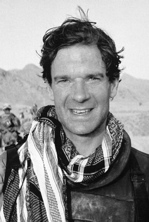
In the Global War Without End on Terror, George Bush’s one recognized success is the apparent demise of al Qaeda. Much is made of the fact that the United States hasn’t suffered another terrorist attack since the atrocities of 9/11. Last April, Director of National Intelligence, John Negroponte described it as a “somewhat weakened organization” that was pretty much reduced to “serving as an inspiration for some of these terroristically inclined groups elsewhere.”
Maybe not. In the latest edition of The New Republic, terrorism expert Peter Bergen says al-Qaeda is back, bigger and badder than ever and it is only a matter of time before it attacks the US again:
“In the months and years immediately following the Taliban’s ouster, Al Qaeda lost its main sanctuary and struggled to regroup in the largely lawless zone along Afghanistan’s border with Pakistan. Key leaders were captured or killed. Years passed during which the group mounted few major attacks.
“But, today, from Algeria to Afghanistan, from Britain to Baghdad, the organization once believed to be on the verge of impotence is again ascendant. Attacks by jihadists have reached epidemic levels in the past three years, with terrorists carrying out dramatic operations in Madrid in 2004 and London in 2005, as well as multiple suicide attacks across the Middle East and Asia–not only in Iraq, but also in Egypt, Jordan, Saudi Arabia, Pakistan, India, and Indonesia. Meanwhile, jihadists have made inroads in the horn of Africa; the Taliban’s efforts to turn Afghanistan back into a failed state appear to be succeeding; and Al Qaeda’s Iraqi branch recently declared sovereignty over the country’s vast Anbar province.
“The story of Al Qaeda’s renaissance begins with its eviction from Afghanistan in late 2001. Unfortunately, the group didn’t disintegrate–it merely moved across the border to the tribal regions of western Pakistan, where today it operates a network of training camps. A former American intelligence official stationed in Pakistan told me that there are currently more than 2,000 foreign fighters in the region.
“…on both sides of the Afghanistan-Pakistan border, the Taliban has staged a comeback while virtually merging with Al Qaeda. The Taliban were a provincial bunch when they held power in Afghanistan, but, in the past couple of years, they have increasingly identified as part of the global jihadist movement, their rhetoric full of references to Iraq and Palestine in a manner that mirrors bin Laden’s public statements.
Bergen predicts that al-Qaeda will be around for years to come but he gives four reasons why the group’s days are numbered:
“First, it has killed a lot of Muslims. This is doubly problematic for Al Qaeda, as the Koran forbids killing both civilians and fellow Muslims.
“Second, while bin Laden enjoys personal popularity in much of the Muslim world, this popularity does not translate into mass support for Al Qaeda–the kind of mass support that, say, Hezbollah enjoys in Lebanon. This is not surprising, since there are no Al Qaeda social welfare services, schools, hospitals, or clinics.
“Third, Al Qaeda’s leaders have constantly expanded their list of enemies, to the point where it now includes all Middle Eastern regimes; Muslims who don’t share their views; most Western countries; Jews and Christians; the governments of India, Pakistan, Afghanistan, and Russia; most news organizations; the United Nations; and international NGOs. It’s very hard to think of a category of person, institution, or government that Al Qaeda does not oppose. Making a world of enemies is never a winning strategy.
“Finally, we know what bin Laden is against; but what is he really for? If you asked him, he would say the restoration of the caliphate. For bin Laden, that doesn’t mean the return of something like the Ottoman Empire, but rather the installation of Taliban-style theocracies stretching from Indonesia to Morocco. A silent majority of Muslims don’t want that.”
Even though al-Qaeda’s long-term prospects are poor, Bergen says the Western presence in Afghanistan and Iraq is fueling the terrorists, garnering al-Qaeda support and giving it a powerful recruiting tool. He foresees two types of attacks al-Qaeda most wants to inflict on the West – bringing down an airliner and detonation of a radiological “dirty” bomb, probably in a European city. The first might devastate global aviation and tourism, the latter could easily undermine global investor confidence.
George Bush had a real chance to destroy al-Qaeda in Afghanistan in 2001. Instead he gave al-Qaeda what it hoped for most, he invaded Iraq. We’re not going to get rid of al-Qaeda now. That job has to be taken up by the Arab states themselves.
January 19, 2007

The answser is bunnies – very, very big bunnies. Karl Szmolinsky breeds the world’s biggest wabbits. They weigh in at around 10.5 kgs. or about 23 lbs.
Szmolinsky says each rabbit yields about 7 kgs. of meat, something that most North Koreans don’t see these days.
He was initially approached by the North Korean embassy and asked whether he would sell a few of his megabunnies and help set up a breeding programme in the communist state. He has sent 12 of his rabbits to Korea so far which he says is enough to breed 60-more within a year.
January 19, 2007
He’s hoping you won’t notice or, if you do, that you’ll forget by the time we have another election. Stephen Harper and Global Warming, who’d a thunk it? Stephen the Green and it all seemed to happen virtually overnight.
Stevie now gets it, right? He’s gone from global warming denier to global warming advocate in about the time it takes him to change his underwear.
He gets it so much that he’s bringing back many of the Liberal initiatives he so recently scorned. A big announcement is expected today that will do just that, of course without admitting it. How about something close to a billion dollars for wind power programmes or Liberal initiatives to encourage energy-saving home upgrades?
Whatever you do, just don’t call them Liberal. You gotta forget all that. These are Tory initiatives, always were – right? There’ll be a lot of tweaking to make it appear distinct from the Liberal programmes, solar and tidal power technology as though these areas would never have been thought of by Stephane Dion.
Hey, when was the last time you heard Stevie puff himself up and bellow “energy superpower”? He seems to have dummied up on that one lately.
By the way, has anyone noticed that CanWest still can’t bring itself to use the term “global warming” substituting the Republican alternative “climate change” instead? Hey Asper, don’t sugar coat it. It is global warming, accept it, Stevie has.
January 19, 2007

The Toronto Star claims to have gotten the inside track on a UN study to be released on February 2 that will pose a body blow to the global warming doubters.
“A major new United Nations report shows global scientists are more convinced than ever that human activity is causing climate change, the Toronto Star has learned.
“The rate of warming between now and 2030 is likely to be twice that of the previous century, it says.
“And it concludes that most of the global warming since the middle of the last century has been caused by man-made greenhouse gases.
“The report, to be released in Paris Feb. 2, should all but end any debate on climate change and compel governments and industries to take urgent measures to deal with it, scientists say.
“One crucial prediction has been made a bit less worrying: Although sea level is rising – for now, mainly because the oceans are warming to a depth of at least 3,000 metres, and expanding – the estimates for how much it will go up have been lowered.
“Regional forecasts of climate change effects are better than in the previous report, and they predict the greatest warming at northern latitudes and high altitudes, and the least over the North Atlantic and the southern oceans.
“The north faces the biggest increase in precipitation.”
January 19, 2007
According to The Star, the Canadian Forces are going to reinforce our contingent in Afghanistan. Unfortunately we won’t be getting more infantry even though the existing force is far too small for the job we’ve taken on. The good news is that the existing troops will be getting additional support although military spokesmen in Ottawa won’t say just what or when that support will arrive.
Best guesses? A flight of CF-18 Hornet fighters for dedicated ground attack in support of Canadian troops. Heavy artillery, M777 howitzers, that were recently purchased from Britain. For surveillance and command, the CP-140 Aurora maritime patrol aircraft configured for use in Afghanistan.
One blogger recently posted photographs of two trains carrying a great quantity of Canadian military vehicles into the United States. It is logical to assume we’re relying on the American military to get this equipment to our troops in Afghanistan. We simply don’t have the means to get them in the field in time.
January 19, 2007

Henry Kissinger is back. The guy who presided over America’s final failure in Vietnam has some advice on Iraq for Washington – continue the occupation.
In an editorial in the International Herald Tribune, Kissinger lays out America’s ongoing role in Iraq and how it must not withdraw.
Reading between the lines you quickly come up with one glaring omission in Kissinger’s logic, the notion that Iraq has become a sovereign state. In fact he presents his arguments from the sole perspective of America’s interests, not Iraq’s. What Henry Kissinger depicts is an indefinite occupation of Iraq in which the Baghdad government functions more like a bureaucracy to carry out the occupier’s instructions.
Kissinger wants to use the Iraq occupation as a means to leverage a regional re-alignment extending all the way to the Palestinian question:
“Two levels of diplomatic effort are necessary:
“The creation of a contact group, assembling neighboring countries whose interests are directly affected and which rely on American support. This group should include Turkey, Saudi Arabia, Egypt and Jordan. Its function should be to advise on ending the internal conflict and to create a united front against outside domination.
“Parallel negotiations should be conducted with Syria and Iran, which now appear as adversaries, to give them an opportunity to participate in a peaceful regional order.
“Both categories of consultations should lead to an international conference including all countries that will have to play a stabilizing role in the eventual outcome, specifically the permanent members of the UN Security Council as well as such countries as Indonesia, India and Pakistan.
“A balance of risks and opportunities needs to be created so that Iran is obliged to choose between a significant but not dominant role or riding the crest of Shia fundamentalism. In the latter case, it must pay a serious, not a rhetorical, price for choosing the militant option.
“In all this, the United States cannot indefinitely bear alone the burden for both the military outcome and the political structure.”
“American forces are indispensable. They are in Iraq not as a favor to its government or as a reward for its conduct. They are there as an expression of the American national interest to prevent the Iranian combination of imperialism and fundamentalist ideology from dominating a region on which the energy supplies of the industrial democracies depend.
Kissinger proclaims that “withdrawal is not an option” and that the occupation must continue:
“An abrupt American departure will greatly complicate efforts to help stem the terrorist tide far beyond Iraq; fragile governments from Lebanon to the Gulf will be tempted into pre-emptive concessions. It might drive the sectarian conflict within Iraq to genocidal dimensions.”
Kissinger’s approach has all the blinders of a typically academic solution. It conveniently omits from the equation several practical considerations. America is a democracy and the American voters want their soldiers out of Iraq. In less than two years those same America voters will be electing a new president and a gaggle of congressmen, a lot of them Republicans. Unless the American government can produce a miracle and resuscitate the support of the American people, the American war is going to come to a premature end by 2008, if not sooner.
That’s what you call democracy, warts and all.
January 19, 2007

So China used a ballistic missile to take out one of its own weather satellites and the world rose up in anger.
Why are we so upset about China? I don’t particularly like that country and I certainly don’t like its repressive system of government but it is a sovereign state, an emerging industrial power and a steadily expanding global actor.
What has China done that the US didn’t do over a decade ago with nary a whimper? Nothing. It took out one of its old satellites. Strictly “old hat” to the US Air Force.
Why have we sat silent while the United States continuously provoked China? Just how did we think China would respond?
Provocation? Yeah, there’s been plenty of that. What do you think accounts for Washington’s recently acquired fondness for India and its fledgling military alliances with that country? If you guessed China, bingo!
Take a look at America’s new naval partner, India, and its rapidly expanding, blue water navy. The Indian navy has quite openly defined its “area of influence” to extend eastward all the way to the Sakhalin Islands. That blankets every inch of China’s coastline. For what earthly reason does India, a country in grave need of infrastructure development at home, need to project naval power into the Philippine Sea, the East China Sea, the Sea of Japan and the westernmost Pacific Ocean all the way up to the coastal waters of Russia? Bingo again.
China, like the European Union and India, understands the importance of space. Like India, China is working hard on developing a manned space programme, long the exclusive preserve of the US and Russia. It is also making rapid advances in commercial space applications.
Just as China is getting into the space game, Bush declares American hegemony over space. Bush’s space doctrine provides that America will decide which nations may have a presence in space and reserves the right to prevent nations acquiring a space presence that Washington considers hostile to its interests. Bush further declares that the US will not be bound by any treaties restricting the deployment of actual weapons in space. In parallel to this, America is developing an anti-missile system to defeat an attack on the US. Roll these factors into the Bush Doctrine of pre-emptive attack and you have an incredibly threatening posture that is if you’re China.
How many protests did you hear coming from world capitals about any of those maneuvres? The Chinese and Russians were miffed but that was about it. We certainly bit our tongues and have now crept, hat in hand, to offer Washington our co-operation in its anti-missile programme.
Why should we be conerned about what Washington is doing in space? Have you heard of HMS Dreadnought? It was Britain’s super-battleship before WWI whose very existence drove other nations to come up with similar warships of their own. London fueled a naval arms race that reached from Britain to Germany, the United States and as far away as Japan. It was an arms race that survived the defeat of Germany and continued on into the Second World War. It brought us names like Hood and Nelson, Arizona, Bismark and Yamato. These things take on a certain life of their own.
What was China’s intent in taking down its own satellite? It probably had several goals. China wanted to make clear that it intends to have free access to space regardless of the Bush doctrine. China wanted the world to sit up and take notice of its new technological prowess. Above all I believe that China wants a space treaty with the US, a genuine agreement that would ensure the demilitarization of space. China needs that. Then again we all do.
 The Mound of Sound