December 2006
Monthly Archive
December 18, 2006

Moderate candidates have taken an early lead in Iran’s local elections. Opponents of President Mahmoud Amhadinejad are poised to take control of councils across Iran.
Incomplete results released by Iran’s Interior Ministry show the winners tend to be moderate conservatives opposed to Ahmadinejad’s radical reform movement.
A freelance journalist said, “After a year, Iranians have seen the consequences of the extremist policies employed by Ahmadinejad. Now, they have said a big ‘no’ to him.”
December 17, 2006

Modern air superiority is a truly awesome power, especially to friendly troops when they’re outnumbered. Being able to call in airstrikes on an enemy can make all the difference in winning and in the casualties our soldiers have to take in order to win.
Airpower is a blunt tool. Although targets can be hit with real precision, the killing zone of these weapons too often makes that precision meaningless for non-combattants who just happen to be in the general proximity of the target.
A fundamental tenet of guerrilla warfare is for the insurgents to mingle with the general population. Dress the same, look the same, make it difficult if not impossible for the conventional or government forces to tell the guerrillas from the civilians. The bad guys can not only hide among them but they can maneuvre through them at will. This tactic also makes it difficult if not impossible not to kill civilians in the process of attacking insurgents.
The bad guys get to use the innocents as camouflage, as conduits to come and go unmolested and also to get the government forces to turn its weaponry on the very people they’re supposed to be protecting.
The families of those killed or maimed may curse both sides but, above all else, they remember who dropped the bomb on their loved ones.
An insurgency is a political war. The guerrillas set the rules and it is the guerrillas who hold the iniative. We can condemn the insurgents for using civilians as human shields and can blame the civilians for allowing the insurgents to exploit them. Maybe that’s good for easing our collective conscience at the sight of the carnage from our aerial devastation but it is meaningless to the war we have to fight.
We rely on heavy air support because we’re forced to rely on it. That’s the unavoidable price of waging war on the cheap, of fielding a force far too small to hold its own without the assistance of aerial bombardment. Our salvation is also our defeat. From the Christian Science Monitor:
“…with so few boots on the ground, the increased reliance on air power has led to thousands of civilian deaths. The devastating air offenses are undermining support for the Afghan government, say human rights workers and Afghan officials, and are turning public opinion in the four southern provinces of Afghanistan against NATO forces, who took command of the south from the US in August.
“US aircraft fired more bombs in the first six months of this year than in the first three years of its campaign against the Taliban, according to figures released by the Pentagon.
“President Karzai’s meeting last Tuesday of NATO and US generals, ambassadors, and Afghan ministers in Kandahar – southern Afghanistan’s largest city and a former Taliban stronghold – was an attempt to examine better methods for tackling the insurgency and curbing civilian deaths.
“But even as top military officials met, NATO troops posted at a checkpoint in Kandahar shot and killed a local tribal elder who was driving a motorbike. The man had failed to heed warning signals as he drove to the meeting with Karzai.
“The Tuesday visit came three days after Karzai wept openly on national television about his helplessness to protect the Afghan people from US, NATO, and Taliban violence.
“‘We can’t prevent the coalition from bombing the terrorists, and our children are dying because of that,’ he said with tears in his eyes during a speech to mark International Human Rights Day, Dec. 10. At the Kandahar meeting, Karzai saved some of his harshest criticism for his Pakistani neighbors, a country he says has been actively helping the Taliban.
“NATO’s strategy has eroded support for its mission as well as for Karzai – nothing could be more telling than Karzai weeping and complaining about NATO killing Afghan civilians,” says Sam Zia-Zarifi, Asia research director for Human Rights Watch.
“By providing much-needed financial aid for the families of victims killed by airstrikes, the Taliban has been able to garner support in the southern provinces, says Sarah Holewinski of the Campaign for Innocent Victims in Conflict (CIVIC), a Washington-based human rights group.
“‘If NATO doesn’t find a way to win the trust and support of the Afghan people, the Taliban will,’ she says. ‘In fact they already are.’
“Fighting against Taliban insurgents who are dressed in civilian clothes and hidden among the civilian population is a difficult task. But the sharp escalation in violence has many southern Afghans asking whether NATO troops are making their lives safer or, ultimately, more dangerous.
“Many Afghans in Kandahar say that they would prefer NATO convoys to avoid the city, because they act as magnets for suicide bombs and the NATO soldiers tend to shoot indiscriminately into crowds.”
Aerial bombardment in civilian areas can help NATO win battles but it might well cost them the war.
December 17, 2006

I know this is going to sound like heresy but why are we banging our heads against a wall trying to rescue democracy in Afghanistan? Why don’t we just find a strongman of our liking, someone who has the strength and stomach to put the Afghan tribes into line, give him money and guns to defeat the Taliban and get the hell out of there?
We first have to give up the tattered illusion of a democratic Afghanistan. Sure you can get Afghans to vote but there’s a lot more to democracy than voting. They have to choose a democracy over tribalism and they’re not making that choice. They have to want freedom and equality for the female half of their population and that’s a complete non-starter. Now, don’t take this the wrong way (it’s not you, it’s them) but they’re not going to embrace a national, democratic government anytime soon.
That’s not to rule out all progress. A benevolent dictator could do wonders for the place, so long as we accept that he’ll have to be pretty brutal at first to get things sorted out. He’ll have to crush the insurgency, he’ll have to put the warlords in their place, he’ll have to suppress the opium trade. Notice I say “he”. That’s no accident, this place isn’t going matriarchal this century or next.
The sad truth is we can’t save Karzai. We don’t have the manpower and we don’t have the stomach for the brutal mayhem that would take. What do we really want out of Afghanistan? I’m thinking we want a place that won’t tolerate al-Qaeda or other Islamist fanatics. Maybe we should just settle for that.
December 17, 2006

There are some people who want you to know. They’re former Israeli soldiers who served in Gaza and they’re not at all proud of what their army did and is doing there. The Toronto Star interviewed one of them, Yehuda Shaul, who spent over a year in Gaza guarding Israeli settlers:
“He recounted the moment when, three months before being released from the army, he was alone and wondering what he would do upon returning to civilian life.
“It struck him, he said, that he had become “a monster,” doing things that were not right. “It was a frightening moment.”
“He spoke to fellow soldiers. “They were feeling the same: `Something’s rotten here.’ Israelis don’t know what goes on here, and we must tell them.'”
“Within three months of being discharged in March 2004, Shaul and friends mounted an exhibit, Bringing Hebron to Tel Aviv. It had powerful photos and video testimony by 64 soldiers showing and describing the treatment meted out to Palestinians by the troops as well as some of the settlers.
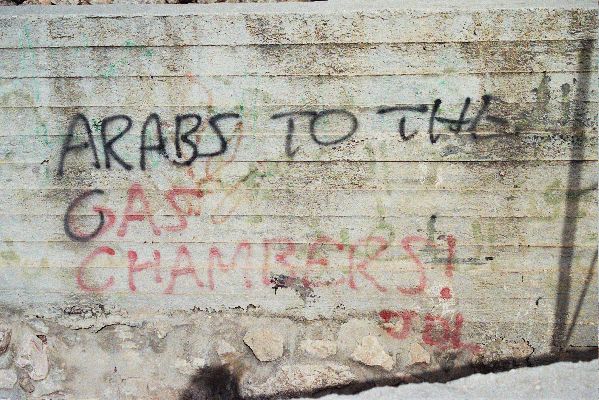
“There were pictures of Palestinians bound and blindfolded. There was a photo of a settler carrying an assault rifle with a decal on the magazine clip: “Kill ’em all, Let God sort ’em out.” Another was of graffiti on a wall: “Arabs to the gas chamber.”

“Other soldiers who had served in the West Bank and Gaza came forward. More photos were gathered, as well as about 400 audio and video testimonies.
“In them, soldiers talk about the total power of the occupiers over the occupied — throwing Palestinians out of their homes; making them stand for hours for disobeying the curfew or trying to bypass a checkpoint or even smiling or arguing at the wrong time, Shaul said.
“We can play with them. This is the mindset from which everything flows.”
In Hebron, Shaul manned a machine gun. “It can shoot dozens of grenades a minute up to a distance of about 2,000 metres. We’d shoot 40 or 50 a day …
“We had three high posts, two where we had kicked the Palestinian families out of and the third was a Palestinian school which we had closed down.
“The idea was that anytime they shoot, we shoot back.
“But the machine gun is not an accurate weapon. You just shoot in the direction of the target … We have no idea how many we killed. I hope no one.”
“Shaul said some acts “flow from being afraid or being bored. You are there eight hours a night at the post. You just aim and shoot the water tank.”
“Or, “when you drive your tank or your APC (armoured personnel carrier), you bump into a streetlight. As you turn a corner, you bump into a wall. It’s fun … It’s all about you. Nothing else matters … Palestinians are no longer human.”
December 17, 2006

A lot of pundits like to compare the mess in Iraq with the American experience in Vietnam in the 60’s and 70’s. In many ways, however, it more closely resembles an earlier disaster, one that began in 1899.
Roughly 108-years ago, the US conquered the Philippines in the course of the Spanish-American war. A Guardian report shows how eerily similar that debacle was to what’s going on today:
“The US took the Philippines in 1899 – part of what its then Secretary of State, John Hay, called ‘a splendid little war’. The previous regime (in this case, Spanish-run) was quickly vanquished, with the shock and awe of superior weaponry. War had begun over American claims that a weapon of medium-sized destruction was used by the Spanish to destroy the USS Maine in Havana harbour, an accusation later considered dubious.
“Republican President, William McKinley, stated he had prayed for guidance, and the divine advice was to ‘uplift and civilise’ the Philippines. The Americans expected a welcome from the Filipinos, and indeed the US was seen as a liberator by many – initially. But US occupation became increasingly unpopular and a protracted guerrilla war developed. During the conflict, more than 4,000 US troops died and several hundred thousand Filipinos lost their lives during the occupation.
“An outcry swelled over civilian deaths and over US treatment of Filipino prisoners, including a torture used known as ‘the water cure’ (a technique similar to the ‘water boarding’ Vice President Dick Cheney defended as a practice in Guantanamo). Some GIs were reprimanded. Military morale fell. When a leader of the insurrection was captured and executed, some thought this would end the violence – it did not.

“The Americans enjoyed an overwhelming advantage in military technology, but Filipinos fought using what they had to hand. Muslim islanders, called to jihad, launched suicide sword attacks in crowded streets. Christian islanders also resisted, but there was conflict between the faiths. Those co-operating with the US were often threatened or assassinated.
“The US war with the Spanish had been planned for months, with a media campaign focusing on the barbarism of Spanish rule. But the Americans had not done their research on the people, nor did they have any detailed plans of how to administer the country. The US organised elections, but was disappointed with the politicians who emerged. It spent millions of dollars improving infrastructure, but won over few hearts and minds. Back home, enthusiasm for the war eroded. Celebrities and intellectuals voiced opposition. The media began to turn, despite the US military offering preferential treatment to journalists who gave favourable coverage. Even big US businesses that were close to the White House started to lose faith in the supposed commercial opportunities the occupation might offer. Eventually this was reflected in the polls and by 1912 the Democrats won control of both houses of Congress, ending years of Republican domination.
“The US decided to leave the Philippines in 1916, granting the islands independence as soon as a stable government could be formed. This proved harder to achieve than expected, for fear the country would descend into chaos. The Second World War intervened and sovereignty was handed back to the Filipinos only in 1946.”
In other words, it took the Japanese conquest of the Philippines in 1941 to create conditions that allowed the US to bow out five years later. Here’s another interesting quirk not included in the Guardian piece: both Bush and his political guru, Karl Rove, have consistently looked upon McKinley, the president whose ambitions led to the occupation of the Philippines, as their role model.
“There are important differences between Iraq and the Philippines a century before. But also surely there’s been a wasted opportunity to learn lessons, by an America that, for all its virtues, does not enjoy examining the past. Mark Twain, who stood up against the Philippine occupation, wrote that, if the past does not repeat itself, it at least rhymes.”
December 17, 2006

A core recommendation of the Iraq Study Group calls for Washington to open talks with Iran and Syria for help in resolving the insurgency and civil wars in Iraq. President George Bush wasted no time in saying “no way” to that one.
Why should Bush refuse to talk? Talk is free, isn’t it? Well, there’s the rub.
Talking with Iran and Syria would be, in fact, a process of negotiation. The US would be trying to get these nations to help out with its own problems in Iraq. Now, from the moment he climbed onto the saddle and raised his sabre in the air, George Bush has been condemning these two countries and freely making threats of what lay in store for them if they didn’t play ball, Washington style.
How can George Bush go to leaders he’s repeatedly villified to ask for their co-operation? He can’t. His Mesopotamian misadventure has undermined his credibility, has sapped his political capital. Tehran and Amman aren’t extending any overtures to Bush because they see no need to make accomodations, at least not gratuitiously. If there are any deals to be made, Washington will have to go to them – on bended knee, bearing plenty of favours and inducements. Even then they could well turn down the offers, if only to cause Bush and America further embarrassment while enhancing their own stature in the Muslim world.
It doesn’t matter that George Bush is the author of his own misfortune, he’s simply too weak to talk.
December 16, 2006
Iraqi Prime Minister Maliki has invited former Iraqi army officers to join the new Iraqi army. These Sunni Baathists are widely believed to have formed the insurgency after being fired by then proconsul Bremer.
It’s hard to imagine many taking up the offer, particularly those who’ve been leading the Sunni insurgency. They would be coming back to an army under the control of a Shia-dominated government. They would also, undoubtedly, be expected to work against the insurgents and that wouldn’t sit too well for their relatives back in the Sunni regions.
It seems to be an offer too loaded to accept. Imagine if Lincoln had invited General Lee’s officers to return to the Union army. I can’t see that this is a much more attractive deal.
December 16, 2006
The people of British Columbia are in the stranglehold of CanWest news service. There are two major dailies in Vancouver – the Sun and the Province – both CanWest properties. Victoria has the Times Colonist – again, CanWest.
If you live on Vancouver Island, it’s a CanWest blanket that includes just about every community paper too such as the Alberni Valley Times and Alberni Valley Pennyworth, the Nanaimo Daily News and Nanaimo Harbour City Star, the Campbell River Courier-Islander and the Campbell River Port Hardy North Islander, the Comox Valley Echo and the Cowichan Valley Citizen plus, on the west coast, the Tofino-Uclulet Westerly.
Atop that we get Global National, Global BC and CH Vancouver Island television.
So, what’s my beef? It’s the oppressive extent of the concentration of media ownership and cross-ownership (tv/newspapers) out here that gives CanWest and its right wing views a near monopoly.
The media serve democracy by presenting the populace with the most diverse range of views and information. When an organization like CanWest is allowed to become so universal it strangles diversity and allows the owner’s views to dominate, unchallenged.
Asper has been criticized for the iron fist with which he controls CanWest’s editorials. It’s time this cabal was broken up and Asper was forced to divest. No media compnay should be allowed to have more than a single newspaper or television or radio station in any given market. When there’s only one voice democracy suffers.
December 16, 2006

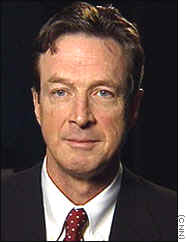
He argues that global warming is pure myth. He’s a virtual rockstar to the global warming denial community, especially those who’ve come to think “Jurassic Park” as something other than fiction.
What are we to make of Michael Crichton? Well for starters, he’s a creepy, sleazy old tirebiter as evidenced by the disgusting hatchet job he did on one of his critics. From The Independent:
“Anyone tempted to disparage Michael Crichton, the author of science fiction novels such as Jurassic Park and Airframe, should be aware of the dangers. However constructive the criticism, it’s possible the writer will use the pages of his next book to strike back – and he is prepared to strike below the belt.
“Last week Michael Crowley, a senior editor at The New Republic, a weekly political magazine, claimed he had become the victim of a “literary hit-and-run” in the pages of Crichton’s newest tome, Next.
“Crowley’s crime was to pen an article in March highlighting Crichton’s well-known disdain for anti-global warming activists, who he accuses of hyping climate science to back their cause, as well as the influence he allegedly wields in the White House.
“‘In his career,’ Crowley wrote, ‘Crichton has relentlessly propagandised on behalf of one big idea: that experts – scientists, intellectuals, reporters, and bureaucrats – are spectacularly corrupt and spectacularly wrong.’
“‘The Bush administration has put this critique into action, trampling the opinions of scientists, exorcising economists, muzzling the press, and stifling State Department wonks.
“‘Crichton, in other words, primed America for the Bush era,’ he wrote, going on to note that after the release of State of Fear in 2004, Crichton was invited by a presidential aide to meet George Bush and had expounded his anti-intellectual cant to anyone who would listen on Capitol Hill.
“In Next, Crichton has written a 431-page novel about genetic engineering run amok, filling his pages with modified apes chattering in German and parrots capable of holding conversations. But on page 227, the author strays into paragraphs seemingly included purely for retaliation.
“He introduces a new figure who is apparently completely superfluous to the wider plot, curiously called Mick Crowley. His manhood is of unusually small dimensions and it has been places it should not have been. To avoid any confusion, the fictional Crowley is a political writer who went to Yale. Which describes the real Crowley too.
“Crowley’s doppelganger is on trial for raping his sister’s two-year-old son after ‘experiencing an overwhelming urge to have anal sex’ with him.
“Elsewhere, he refers to his Crowley as a spoilt heir to a pharmaceutical fortune, a “dickhead”, a “weasel” as well as “that political reporter who likes little boys”.
“The real Michael Crowley has responded by way of a riposte in the 25 December issue of The New Republic and is already on its website under a link entitled “Michael Crichton, Jurassic Prick”.
“He suggests that the author has tried to employ a doctrine called “the small penis rule” whereby it’s safe to attack someone by way of a proxy literary figure who is under-endowed on the grounds that no one will ever publicly acknowledge that the guy is them .
“Crowley said he was “strangely flattered”. “If someone offers substantive criticism of an author, and the author responds by hitting below the belt, as it were, then he’s conceding that the critic has won.”
December 15, 2006

The planets have realligned in the heavens, bad news for Jack Layton.
Layton’s NDP has tanked in recent polls, losing supporters to Stephane Dion. There’s talk of toppling the Harper government in the New Year. That’s bad news for Stephen Harper and Jack Layton.
Layton was instrumental in allowing Harper to get into office, will he become Stevie’s bumboy to keep him there?
Layton’s gambit in toppling the Martin government hasn’t played out too well for the NDP. The Liberal Party under Stephane Dion is flexing its muscles as only the Libs can do – pushing right and left. A lot of progressives aren’t happy with Harper and a lot of the left has been turned off by Layton’s bumbling.
A quick election threatens Harper and Layton. Both desperately need to regroup and that will take time. It would be damning evidence of rank opportunism but if Jack Layton wants to preserve his own political future, he may have to throw in with Stephen Harper. Wouldn’t that be delightful? Martin had to go but Harper stays? Yeah, sure Jack.
« Previous Page — Next Page »





 The Mound of Sound