November 2006
Monthly Archive
November 30, 2006

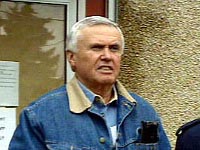
Colin Thatcher has been given full parole. After spending 22-years behind bars for the murder of his ex-wife, Jo Ann Wilson, the National Parole Board has decided his risk to offend is ‘manageable within the community.’
Thatcher says he’s learned the importance of keeping his temper in check, “I’m not going back to prison for some silly violation.”
November 30, 2006

We’d better hope America has a contingency plan to throw tens of thousands of soldiers into Afghanistan on short notice.
The dismal failure of the NATO summit showed that the Afghanistan mission is to remain desperately undermanned. Even retired general Lewis MacKenzie has repeatedly urged NATO to reinforce its numbers by at least another 30,000. Fat chance.
The International Herald Tribune’s Ahmed Rashid writes from Peshawar, Pakistan that the NATO summit portends a larger war:
“In the future annals of the spread of Islamic extremism and Al Qaeda, the NATO meeting this week will almost certainly be considered a watershed. Germany, Spain, Italy and France, which refused to allow their troops in Afghanistan to go south to fight the Taliban, and other member states who refused to commit fresh troops or equipment, may well be held responsible for allowing Afghanistan to slip back into the hands of the Taliban and their Qaeda allies.
“Such desperately depressing considerations arise from the fragile state of the Afghan government, the massive surge in Taliban attacks this year, the collapse of civil authority in wide swathes of the country and the rise in opium production, which is funding not just the Taliban, but a plethora of Afghan, Kashmiri, Central Asian, Chinese and Chechen Islamic extremist groups based on the Pakistan-Afghanistan border.
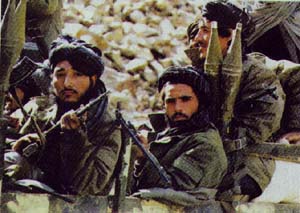
“Last summer the Taliban planned to capture Kandahar – the second-largest Afghan city – and set up an alternative government. They were only just thwarted by the sacrifices of NATO British, Canadian, Dutch and American troops and their Afghan allies, who fought pitched battles with battalion-size Taliban units – battles the likes of which the West had not experienced since the Korean War.
“Tribal leaders in Peshawar and along the border now say that the Taliban are recruiting thousands of fighters in Pakistan and Afghanistan for a full-scale, multipronged offensive in the spring, which will open so many fronts in southern Afghanistan that present NATO forces will be unable to cope. This time the target is Kabul and the government of President Hamid Karzai.
The Taliban will fully understand and exploit NATO’s failure to respond to these threats. NATO’s inaction will also cause massive demoralization among the Afghan people and encourage warlords and drug traffickers to prepare for the coming anarchy.
“Most significantly, NATO’s decision will pave the way for further interference by neighboring states, which helped fuel the civil war in Afghanistan throughout the 1990s.
“Pakistan’s military regime, which provides clandestine support to the Taliban and has refused to accept NATO and U.S. plans to arrest the Taliban leaders on its soil, has long calculated that in time the West will walk away from Afghanistan. Pakistani officials are already convinced that the Taliban are winning and are trying to convince NATO and the United States to strike piecemeal deals with the Taliban in the south and east, which eventually could develop into a Pakistani- brokered Taliban coalition government in Kabul.”
Rashid’s assessment of conditions on the ground on Afghanistan is pretty grim. If the Taliban are massing a force of many thousands to swarm Afghanistan in the spring, somebody – Pakistan, the US or NATO – needs to attack them pre-emptively and very soon.
November 30, 2006

“Japan is capable of producing nuclear weapons, but we are not saying we have plans to possess nuclear weapons.”
That’s what Japanese foreign minister, Taro Aso, told a parliamentary committee today. This message comes at a time when the Japanese government is looking at rewriting the country’s constitution that prevents it from creating an offensive military capability.
Aso called for a renewed debate on Japan’s anti-nuclear stance but added that the constitution does not prohibit Japan from acquiring nuclear weapons for defensive purposes.
“Possession of minimum level of arms for defence is not prohibited under Article 9 of the constitution,” he said. “Even nuclear weapons, if there are any that fall within that limit, they are not prohibited.”
November 30, 2006
Poor Dr. Kendal Myers. He’s finished, done. From Whitehall to Washington they want his head. Myers has commited the mortal sin – of stating the obvious.
At an academic forum in Washington the senior State Department analyst said that for all Britain’s attempts to influence US foreign policy, “we typically ignore them and take no notice. It’s a sad business.”
Other observations from Dr. Myers:
“It was a done deal from the beginning, it was a one-sided relationship that was entered into with open eyes … there was nothing. There was no payback, no sense of reciprocity.”
“What I think and fear is that Britain will draw back from the US without moving closer to Europe. In that sense, London’s bridge is falling down.”
Tony Blair has repeatedly justified his pro-Washington stance by claiming Britain had an essential role to play by co-operating in order to influence American policy. Myers certainly burst that balloon.
It’s now reported that Dr. Meyers is contemplating early retirement. Quelle surprise.
So if ever faithful ally Tony Blair gets nothing from Bush, just how much do you think Harper is going to achieve by kneeling at Shrub’s feet?
November 30, 2006
If the Afghanistan experience accomplishes nothing else, it may provoke a thoughtful analysis of what the alliance is and, more importantly, what it is not.
Politicians and pundits alike moan that a failure of the Afghan mission will doom NATO. Unfortunately they don’t tend to explain why that fate must befall the alliance.
From the outset, Afghanistan wasn’t a natural fit for NATO intervention. Yes, the United States had been attacked but not by Afghanistan. The attackers were a gang of Islamic radicals, mainly Saudi, and not a single Afghan among them. What blame fell to the Taliban is simply that they tolerated al-Qaeda training camps in their territory. Remember, al-Qaeda was all too welcome in Afghanistan, even by the US, when it first arrived to fight the Soviet forces. It played a significant role in ousting the Soviet occupation and, as such, it would have some standing with the Taliban afterwards.
Five years later and no one has shown the slightest participation in or even knowledge of the 9/11 plot by the Taliban nor, for that matter, their participation in any other al-Qaeda skullduggery.
So the United States was not being attacked by Afghanistan or by the Taliban but, by virtue of the attack alone, we all agreed to intervene in the ongoing civil war between the Northern Alliance and the Taliban, siding with the northern warlords.
After routing the Taliban and al-Qaeda into the mountains of Tora Bora, the United States showed gross negligence in failing to finish them off. Instead it diverted its forces into a contrived war of choice against Iraq.
When the US invasion toppled Saddam and destabilized Iraq, al Qaeda took full advantage of the opportunity to regroup and redeploy into this fertile territory. Note that there’s been no similar Taliban insurgency or terrorism in Iraq. The hard truth is that the Taliban is no more threat to America in Iraq today than it ever was in Afghanistan prior to the American intervention.
The Taliban is, however, a very real threat to the government of Hamid Karzai, America’s handpicked President of Afghanistan. I suspect the northern warlords might be an equal threat to Karzai were he to move to control their provinces, disarm their militias and meddle in their affairs. This raises the difficult question of whether the Taliban resurgence is an actual insurgency or merely a civil war in which the West is, again, taking sides.
These unanswered, often unasked, questions run through the public aversion to the Afghanistan mission in several NATO nations. Without answers it is very difficult to weigh the true merits and necessity of this intervention and it creates the appearance that NATO is simply doing George Bush’s bidding.
If a NATO member’s populace strongly oppose a mission such as Afghanistan where no member is genuinely under attack, does the alliance have any business trying to coerce support? Surely that will doom NATO more certainly than the success or failure of the Afghan mission. The strength of NATO rests in it not being called to action except when it is absolutely necessary to defend another member state. That is what it was intended to do and nothing more. We stray from that path at our peril.
NATO cannot be allowed to trump democracy.
November 29, 2006
According to the Italian who met Alexander Litvinenko on the day he fell ill, the former Russian spy confessed during their meeting to having smuggled nuclear material out of Russia for his masters at the FSB, formerly the KGB.
Mario Scaramella, an academic and examining magistrate in Rome and Naples, came to London to meet Litvinenko to discuss a death threat aimed at both of them.
Scaramella says he has been investigating the smuggling of radioactive materials by the KGB and its successors. He has claimed that the Soviet Navy laid 20 nuclear torpedoes in the Bay of Naples where they supposedly remain to this day.
November 29, 2006
What is a superpower except a nation that enjoys dominance over most other nations? If that’s close to right, Canada may be on a path to superpower glory.
How’s that you say? Well, according to climate change guru and creator of the Gaia Theory, James Lovelock, we may be headed for a world in which the population of earth will drop to around 500-million, all of them living in the Arctic:
“‘We are not all doomed. An awful lot of people will die, but I don’t see the species dying out,’ he told a news conference.’A hot earth couldn’t support much over 500 million.’
“’Almost all of the systems that have been looked at are in positive feedback … and soon those effects will be larger than any of the effects of carbon dioxide emissions from industry and so on around the world,’ he added.
“Lovelock said temperature rises of up to 8C were already built in and while efforts to curb it were morally commendable, they were wasted.’It is a bit like if your kidneys fail you can go on dialysis — and who would refuse dialysis if death is the alternative. We should think of it in that context,’ he said. ‘But remember that all they are doing is buying us time, no more. The problems go on,’ he added.
“In London to give a lecture on the environment to the Institution of Chemical Engineers, he said the planet had survived dramatic climate change at least seven times.
“’In the change from the last Ice Age to now we lost land equivalent to the continent of Africa beneath the sea,’ he said.
“’We are facing things just as bad or worse than that during this century. There are refuges, plenty of them. 55 million years ago … life moved up to the Arctic, stayed there during the course of it and then moved back again as things improved. I fear that this is what we may have to do,’ he added.
“Lovelock said the United States, which has rejected the Kyoto Protocol on cutting carbon emissions, wrongly believed there was a technological solution, while booming economies China and India were out of control.”
November 29, 2006

In an interview with MSNBC yesterday, Washington Post Pentagon reporter, Thomas Ricks, said the Pentagon is seriously weighing dropping its support for the existing, multi-ethnic Iraqi government in favour of Shia strongman rule under Muqtada alSadr.
Ricks said the Pentagon has concluded that alSadr’s star is rising in Iraq. It is believed that, if an election was held today, he would win almost all seats in the Shia region, including Baghdad. The inability of the Maliki government to control terrorism and lawlessness in Iraq has led the Pentagon to now favour Shia rule under alSadr even to the exclusion of Sunni Iraqis.
There have been rumours for months that Washington was rethinking its commitment to democracy for Iraq and mulling over the benefits of a return to strongman rule.
Meanwhile, ignoring their own responsibility for the violence that besets Iraq today, all manner of Americans are freely laying the blame on the Iraqis themselves which many believe marks the prelude to withdrawal of US troops.
“Thomas Donnelly, a hawkish defense expert at the Center for Strategic and International Studies, said he considers blame a legitimate issue. ‘Ultimately, just like success rests with the Iraqis, so does failure,’ he said. ‘We’ve made a lot of mistakes, but we’ve paid a huge price to give the Iraqis a chance at a decent future.’
“The blame game has also been playing out somewhat divisively within the secretive Iraq Study Group. The bipartisan commission, led by former secretary of state James A. Baker III and former congressman Lee H. Hamilton (D-Ind.), is deliberating policy recommendations to put forward next month.
“‘I’m tired of nit-picking over how we should bully the Iraqis into becoming better citizens of their own country,’ former CIA Middle East expert Ray Close wrote in an e-mail to the other advisers to the study group.
“Several other experts of various political stripes said this tendency to dump on Baghdad feels like a preamble to withdrawal.
“‘It’s their fault, and by implication not ours, is clearly a theme that’s in the air,’ said retired Army Col. Andrew J. Bacevich, a Vietnam veteran and longtime skeptic of the war in Iraq. It reminds him, he said, of the sour last days of the Vietnam War, when ‘there was a tendency to blame everything on the ‘gooks’ — meaning our South Vietnamese allies who had disappointed us.'”
The days of the Maliki government may be numbered in months, perhaps weeks. alSadr has already begun his moves by withdrawing from the Baghdad government. At the end of the day, Washington may have no choice but to annoint him strongman ruler of Iraq.
November 29, 2006
One factor that bedevils NATO’s Afghanistan mission more than any other is neighbouring Pakistan. It has a sizeable population, a heavily-armed military, even nuclear weapons. It is politically unstable and its military and security services are heavily influenced by Islamic fundamentalism. The central government has been unable to control Pakistan’s border regions with Afghanistan where Pashtuns and Baluchs feed the Taliban insurgency in Afghanistan. Although George Bush has named Perves Musharraf a key ally in the Global War Without End on Terror, Musharraf himself isn’t safe even in his own capital.
Pakistan is invested heavily in Afghan politics. It has long favoured the Taliban, if only as a means of ensuring its own influence in Afghanistan especially over Indian overtures. Pakistani forces seem much more willing to go after al-Qaeda agents than Taliban leaders.
NATO is already on the defensive in southern Afghanistan. It doesn’t have nearly enough troops to do more than try to keep the Taliban at bay in selected parts of the southern provinces. It can’t begin to deploy the size of force that would be needed to seal off the Afghan/Pakistan border, the Taliban lifeline. Any notion of pre-emptive strikes against insurgent strongholds within Pakistan is out of the question.
It isn’t particularly surprising then to read Ahmen Rashid’s report from Islamabad in today’s Sidney Morning Herald claiming that Pakistan’s foreign minister has urged his NATO counterparts to recognize reality and negotiate with the Taliban:
“SENIOR Pakistani officials are urging NATO countries to accept the Taliban and work towards a new coalition government in Kabul that might exclude the Afghan President, Hamid Karzai.
“Pakistan’s Foreign Minister, Khurshid Kasuri, has said in private briefings to foreign ministers of some NATO member states that the Taliban are winning the war in Afghanistan and NATO is bound to fail. He has advised against sending more troops.
“Western ministers have been stunned. ‘Kasuri is basically asking NATO to surrender and to negotiate with the Taliban,’ said one Western official who met the minister recently.
It is inconceivable that NATO has reached the point where its leaders would entertain Kasuri’s suggestion. One person to whom the idea isn’t that outlandish – Afghanistan President Hamid Karzai. He’s been sending diplomatic peace overtures to the Taliban for quite a long time. Of course, Karzai is hardly independent of Washington as he would need to be to cut a deal with the Taliban. It is difficult to imagine any American government, Democratic or Republican, countenancing an Afghan coalition government that incorporated the Taliban.
Kasuri’s comments, however, may be seen as a wake-up call by NATO. If the Pakistanis genuinely perceive the Taliban to be winning, we’d better not count on this supposed ally to go beyond hedging its bets. What our generals have identified as the key to winning in Afghanistan – Pakistan itself – may already be lost to us.
November 29, 2006
When President Bush gets together with Iraqi PM Maliki on Wednesday, they’ll be meeting in Jordan. It’s reported that Baghdad is now considered far too dangerous for Bush to visit. It makes you wonder why he refuses to admit that Iraq is in the grip of a civil war?
According to Mr. Bush, al-Qaeda is responsible for the sectarian violence now spreading through Iraq. Does that mean that Shia Iran is now off the hook?
Acknowledging the fact of civil war would be awkward for the American president. It would bring into question the viability of the Maliki administration and possibly leave the US in a position where it had to take sides. Of course it would also be lethal to the little support George Bush can muster at home for the Iraq occupation.
The question is how long the United States can sit this one out?
Next Page »


 The Mound of Sound