October 2006
Monthly Archive
October 25, 2006

A formula for victory in Afghanistan appeared in this morning’s Globe. Former government foreign policy advisor and now a professor of internationl affairs at Ottawa U., Roland Paris outlined five pre-conditions to winning in Afghanistan:
1. Stop destroying the poppy fields. Try regulating the stuff instead. Buy opium to reduce the global shortage of opium-based pain killers.
2. Clean up the corrupt police service.
3. Clean up government corruption.
4. Build a legitimate Afghan army that can defend its country.
5. Arrest the flow of Taliban fighters from their bases in Pakistan.
Professor Paris is a realist. He knows that these objectives won’t be met without a wholesale increase in NATO support. He describes “the mission” as, “the most under-resourced international stabilization operation since the Second World War,” pointing out we have one soldier per 1,000 Afghans whereas we had ratios of 3.5 in Haiti, 19 in Bosnia and 20.5 in Kosovo.
Paris argues that, unless NATO countries are willing to greatly increase their forces, NATO “should not wait around for conditions to worsen. It should withdraw, because the current course is a recipe for creeping defeat – and that would do untold damage to the alliance.”
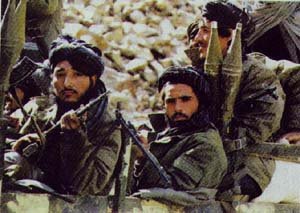
The Taliban are waging their war, the political war, while NATO continues to fight a mainly military war. The once mysterious Taliban are now becoming open to western journalists, undoubtedly with a view to waging their political war with the citizens of NATO states. To do this they’ve been giving western reporters a first-hand look at their operations.
The New York Times’ Elizabeth Rubin spent time with the Taliban last summer. Some of her views:
“It is not at all clear that Afghans want the return of a Taliban government. But even sophisticated Kabulis told me that they are fed up with the corruption. And in the Pashtun regions, which make up about half the country, Afghans are fed up with five years of having their homes searched and the young men of their villages rounded up in the name of counterinsurgency.
“Earlier this month in Kabul, Gen. David Richards, the British commander of NATO’s Afghanistan force, imagined what Afghans are thinking: “They will say, ‘We do not want the Taliban, but then we would rather have that austere and unpleasant life that that might involve than another five years of fighting.”’ He estimated that if NATO didn’t succeed in bringing substantial economic development to Afghanistan soon, some 70 percent of Afghans would shift their loyalty to the Taliban.”
The British newspaper, The Independent, had its David Loyn inspect the Taliban operation in Afghanistan:
“Racing across the desert in the north of Helmand province, our convoy was kicking up a dust-storm that could be seen from space. The Taliban were demonstrating their control over a wide region. These are the same Taliban that Brigadier Ed Butler, the commander of British forces in the region, said were “practically defeated” in Helmand.
“Instead, they are confident and well-armed, all with AK-47s, and many of them carry rocket-propelled grenadelaunchers.
“We passed the burnt-out remains of a Spartan armoured personnel carrier, destroyed on 1 August with the loss of three British lives. Last week the British were forced to abandon their “platoon house” at Musa Qala, and were only able to get their vehicles after a deal brokered by local tribal elders. The plan to spread goodwill from these “inkspots”, and provide an environment to deliver aid, has had to be radically reviewed in the face of heavy Taliban attacks.
“Their communications equipment and vehicles are new and they have a constant supply of fresh men from the madrassas, the religious schools in Pakistan. Recently, the “Waziristan accord”, which has seen Pakistani forces withdraw from parts of the tribal areas bordering Afghanistan, has made it even easier for the Taliban to manoeuvre.”
“Meanwhile, the scale of institutionalised corruption practised by the Afghan National Army is shocking. They demand money at gunpoint from every driver on the main roads in the south. It was to stop just this kind of casual theft that the Taliban was formed in the first place in 1994. For the first time since then, the Taliban are now being paid again to sort out the problem.”
Afghanistan is rivalling Iraq as a destination for foreign, Arab jihadists. According to the L.A. Times:
“Foreign fighters are predominantly Sunni. They increasingly prefer fighting alongside the Taliban to getting embroiled in the Sunni-versus-Shiite bloodshed in Iraq, said Caprioli, who works closely with the intelligence community at the Paris-based GEOS security firm.
“There are a certain number of foreign jihadis who aren’t interested in massacring Shiites,” Caprioli said. “In Afghanistan, you have NATO troops to fight as well as Americans, all the ‘crusaders.’ “
“In addition, veterans of combat in Iraq have made their way to Afghanistan, officials said.
“There’s a definite increase in foreign fighters going to Afghanistan from all over,” said a U.S. anti-terrorism official, who spoke on condition of anonymity. “They go through Pakistan. Or they train in Iraq and then keep going to Afghanistan.”
Clearly the Taliban and their jihadist Arab allies are upping the ante in Afghanistan. Our politicians and generals continue to paint a rosey picture of the country as a battle that can and will be won. If that’s going to happen, they’ll need to substantially bolster NATO’s efforts before the political war is lost.
October 25, 2006

When Dick Cheney talks about Iraq you pretty much know what’s going to happen and that tends to be the opposite of what Dick Cheney claims.
Iraq had weapons of mass destruction. Iraqis would greet American forces as liberators. The Iraq insurgency is in its final throes. There’s nothing this guy won’t say.
Cheney, however, may be saving his best lines for last. When he does speak to the media, Cheney goes with the rightwing pundits. They lob slow pitches to him and he runs with it. Here’s how the veep described Iraq just days ago on Rush Limbaugh’s show:
“If you look at the general overall situation, they’re doing remarkably well.”
With mid-term elections looming, Cheney is obviously trying to mobilize his base – the people who are sufficiently mindless to still believe anything he says. Sad, isn’t it?
October 25, 2006

When it comes to global warming, we Canadians have it awfully good. Oh sure Canada as we’ve known it will see changes, some of them severe, but the worst will take decades to get here. Residents of poorer nations, however, are right at the front of the line. They don’t have to wait at all.
Already, low-lying nations are sinking, disappearing. One of these is the South Pacific state of Kiribati. On Tuesday, Kiribati president Anote Tong warned Australia and New Zealand to prepare for a mass migration of Kiribati’s population within a decade. It’s a common condition of small South Pacific nations. Tarawa, another nearly flat spot and only 500-metres wide at some points has had to import sand from Australia to bolster its beaches. Now its population is being forced to relocate to whatever high ground they can find on their shrinking landmass.
It is no coincidence that the nations that produce the greatest pollution will, in most cases, be the last and least affected. If it was the other way around do you think we’d be still sitting on our hands?
October 25, 2006

Former German chancellor Gerhard Schroeder is no fan of George Bush. His refusal of American overtures for German participation in Iraq helped Schroeder win re-election in 2002. In his newly released biography, Schroeder takes the measure of George Bush and why he believes the U.S. president will have trouble bringing peace to Iraq:
“Again and again in our private talks it became clear how God-fearing this president was and how ruled he was by what he saw as a higher power,” Mr Schroeder says in the memoirs, Decisions: My Life In Politics.
“The problem begins when political decisions seem to result from a conversation with God. We rightly criticise that in most Islamic states there is no clear separation between religion and the rule of law.
“But we fail to recognise that in the US, the Christian fundamentalists and their interpretation of the Bible have similar tendencies. If both sides claim to be in possession of the only valid truth, then there is no room for manoeuvre.”
October 19, 2006
A recent poll shows a signficant minority in most western nations favour the use of torture to extract intelligence. This minority demonstrates the power of myth and ignorance.
Torture doesn’t work. It does not work to extract reliable information. Victims of torture either don’t talk at all or else they tend to tell their interrogators whatever they want to hear.
One technique U.S. interrogators have been using is known as “waterboarding.” The victim is strapped down on an inclined board, head toward the lowest end. A cloth is placed over his face and then water is poured onto the cloth. This creates the sensation of drowning and is said to be very effective – at torturing the victim.
Here is a picture of a waterboard table with a painting above it that illustrates its use:

The device shown was used in Cambodia. Apparently it was used a lot and very effectively. It was used, not to get intelligence, but to extract confessions. It seems that the Cambodians clearly understood that there was no intelligence to be had from victims on the table.
Bush & Company like torture and want to use it freely. They like it even though accounts from Iraq, Afghanistan and Guantanimo have consistently shown torture to be ineffective at producing intelligence. It makes you wonder what sort of a person the president is if he wants the power to torture so much when it doesn’t work.
October 19, 2006
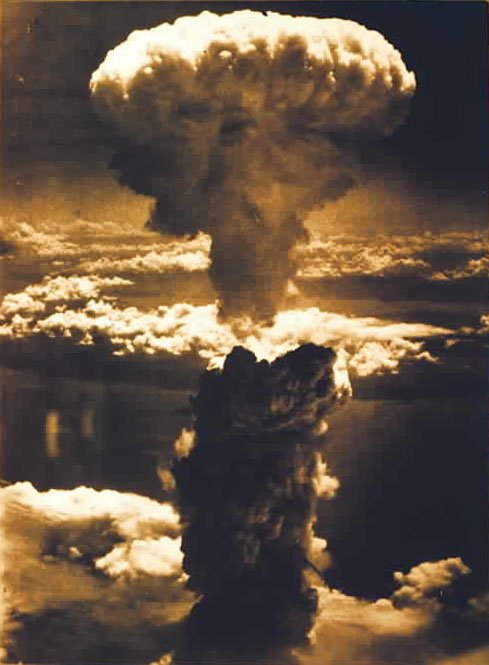
 Nagasaki
The industrialized world tends to react with a mixture of anger, fear and frustration when Third World nations pursue nuclear weapon capabilities. We’re so used to the big powers – the United States, Russia, China, France and Britain having these weapons that we rarely even think twice about it. Sure, they’re more stable than places like Pakistan and far more so than North Korea but, then again, the big states count their nuclear weapons in many thousands. The big powers also have a considerable array of delivery systems from intercontinental ballistic missiles, to submarine launched long-range missiles, to manned bombers, to cruise missiles, even to long-range nuclear artillery.
What makes these little nations willing to risk the anger of the world, including sanctions, to get a few, small weapons of their own? Consider this analysis from Lebanon’s Daily Star:
“It is interesting to note that all these countries are united by two denominators, which explain their common objective of pursuing nuclear programs.
“First, the governing regimes are ruling in an insecure and unstable domestic or regional environment. India and Pakistan are involved in a dispute over the border and territorial issue of Kashmir. The authoritarian North Korean government has not yet given up on its strategic objective of annexing South Korea.
“The threat perceptions of the ruling elites in Egypt, Iran and the GCC countries are heightened through the unresolved Arab-Israeli conflict, the unpopular US involvement in the region, and the unstable situation in Iraq. And, Iran and the GCC countries are entering a struggle over strategic hegemony in the Gulf.
“Second, in the global scenario, on the one side are the US with the world’s largest defense budget and huge military capability, as well as economic powerhouses Japan and the EU. On the other side are developing countries India, Pakistan, Iran, Yemen and North Korea, none of which possess the military capabilities or the economic strength of the developed countries. North Korea, Yemen and Egypt have to deal with poor economic performance and education standards, and there is no sign of any short-term alternative to bridge the economic or military gap.
“Thus, it appears that regimes which have existed over the years in an insecure domestic or regional environment or lack trust and confidence due to economic instability have increasingly developed threat perception toward potential enemies from within their own countries or region. It is in this context that they are trying to improve their strategic position by looking for short-term solutions. Many of these regimes equate security with enhanced military power, and nuclear enrichment seems the cheaper, faster and efficient alternative to overcome their insecurities and emerge as credible powers.
“From the North Korean perspective, a nuclear bomb boosts the regime’s chances of survival and gives it an advantage in negotiations with South Korea. Similarly, for Iran, acquiring a nuclear capability will help the regime use it as a tactical means to gain an upper hand in the ongoing dispute with the UAE over the Abu Musa and Greater and Lesser Tunbs islands. The Iranian regime may also attempt to develop a “containment policy” of the US influence in the region. As far as the GCC countries are concerned, it will be impossible to live with a nuclear Iran evolving as hegemon and thus they may be forced into a “nuclear race” to maintain the “balance of power” in the Gulf.”
Our world seems poised on the edge of a wave of nuclear proliferation. Maybe we need to approach the problem from a new perspective. Whether India, Pakistan, North Korea or even Iran, our tired, predictable attitudes just aren’t working and the nations we need to worry about know that.
October 19, 2006
 Palestinian Kids – What Future?
A great feature of the internet is the variety of online newspapers at your fingertips. When an event happens in a distant corner of the world I try to find whether that country has an English-language online paper and then take a look. Because of problems like pack journalism, the accounts we get in our media tend to be predictable and filtered by our perspective. It should be no surprise that you can often get a very different, and often really informative, viewpoint by going to a news outfit that’s right at the source of a problem.
During the last conflict I visited Israeli and Lebanese online papers and learned a lot that never made it into western, mainstream papers. Today I found two interesting items in a Lebanese paper, the Daily Star.
One was a telling comparison of the Northern Ireland peace process and the Mideast equivalent. The reporter, Rhami Kouri, identified three factors that made the Northern Ireland initiative productive that are absent and need to be copied in resolving the Palestinian question:
“Several important points about the Northern Ireland process stand out. For one thing, it is working, and needs to be studied to grasp precisely why that is the case. It has not been fully implemented, but the region is no longer convulsed by political violence and terror. Any agreement that achieves that through negotiations deserves closer scrutiny.
“It is working primarily because of three reasons, it seems. First, it brought into the negotiating process all the key parties who were deemed to be legitimate in the eyes of their own communities, regardless of how other communities saw them. So Sinn Fein represented the IRA, regardless of the Unionists’ revulsion for the IRA. The fact of being inclusive was an important element for success.
“Second, the parties recognized that they would achieve through peaceful negotiations important gains that could not be achieved through continued militancy. Diplomacy that succeeded and offered a vision of a better future spurred a greater willingness to persist on the path of peaceful negotiations, and so all sides committed to peaceful resolution of their conflict.
“Third, the external mediator – the United States – was at once persistent, patient and impartial. It did not take sides, but worked tirelessly to bridge gaps between the parties and offer mechanisms to restore confidence when it was shaken.
“None of these elements exists today in the Arab-Israeli situation, and so it is not surprising that our region of the world witnesses destructive wars while Northern Ireland joins the ranks of the world’s wealthy societies. The sad irony is that as the Northern Ireland situation resumes its momentum toward a permanent settlement, its historic lessons for the Arabs and Israelis are ignored, even though many of the broad dynamics of both conflicts seem so similar.
“For example, Israel and the US refuse to deal with a Palestinian government led by Hamas, which was democratically elected. Yet in Northern Ireland the British and the US had no problem dealing with the IRA, which used terror for many years. Their decision to engage the IRA through Sinn Fein proved wise and productive, because the IRA soon got out of the terror business and decommissioned its arms. That experience suggests that focusing on the substance of the political goals that one desires from a negotiation is more important than allowing oneself to get hung up on whom one should talk to or not talk to.
“Israel and Hamas do not like or recognize each other, but they are both acting irresponsibly in continuing to avoid engaging each other in a political process that gives their people the possibility of living normal, peaceful lives.
“The same can be said of Iran and the United States. It is instructive for these and other parties in the region to ponder the Northern Ireland situation and acknowledge the importance of focusing on how to achieve desired outcomes that respond to the legitimate rights and needs of both parties to a conflict, rather than getting stalemated on false issues of honor and dishonor in engaging one’s adversaries.
“Northern Ireland has much to teach us all about the business of conflict resolution – and also about acting like adults.”
And that is a great deal more wisdom that you find today in our papers. When you think about these points, they’re really all just common sense and it makes you wonder how this has eluded the principals to the Mideast process. Let’s hope someone in Washington bothers to read Lebanon’s Daily Star.
October 18, 2006
I’ve written a couple of posts lately critical of the Bush space defence plan and our senate’s endorsement of it. Put simply, it struck me that this programme was going to lead to the deployment of offensive weapons in space and that, in turn, might trigger a very dangerous arms race.
Liberal Senator Colin Kenny dismisses doubters. He wants Canada to waste no further time in jumping aboard Washington’s space defence bandwagon. Maybe it’s time Kenny began paying attention to the signs that he’s wrong, dead wrong.
The Washington Post reports that Bush has just signed a new National Space Policy that, “rejects future arms-control agreements that might limit U.S. flexibility in space and asserts a right to deny access to space to anyone hostile to U.S. interests.”
“Hostile to U.S. interests,” obviously means any other nation that might want to militarize space themselves, even if only defensively.
According to the Washington Post story:
“Freedom of action in space is as important to the United States as air power and sea power,” the policy asserts in its introduction.
“National Security Council spokesman Frederick Jones said in written comments that an update was needed to “reflect the fact that space has become an even more important component of U.S. economic, national and homeland security.” The military has become increasingly dependent on satellite communication and navigation, as have providers of cellphones, personal navigation devices and even ATMs.”
“Theresa Hitchens, director of the nonpartisan Center for Defense Information in Washington, said that the new policy “kicks the door a little more open to a space-war fighting strategy” and has a “very unilateral tone to it.”
“The administration official strongly disagreed with that characterization, saying the policy encourages international diplomacy and cooperation. But he said the document also makes clear the U.S. position: that no new arms-control agreements are needed because there is no space arms race.”
There is no space arms race because Washington believes it can go ahead and keep every other nation, by force if necessary, from responding in kind to what it is doing. Amerika Uber Alles.
By reserving to itself the right to decide who can and cannot have a presence in space and for what purposes, Washington is asserting sovereignty over space itself. America knows that, when you assert sovereignty, you have to develop and deploy the means to enforce that claim.
Senator Kenny, wake up. It’s time you pulled your head out of …. the sand.
October 18, 2006
It was bound to happen. The fallout from the Foley/Hastert scandal has sparked an internal uproar that may bring down the Republican house of cards.
There was a time when the GOP was seen as the party of narrow interests, the buttoned down types. The Democrats were the eclectic gang, more tolerant of diversity. That’s how the Dems drew minorities.
Then the Republicans sought to target these same voters and went for the “big tent” strategy by claiming their party offered a home where minorities – blacks, gays, etc. – could feel welcome. The core Republicans, the fiscal conservatives, moved over as chairs were added to seat these minority groups. A lot more chairs were added to accommodate the social conservatives – the Christian right. Everybody sort of learned to live together. For the gays, it was a matter of “don’t ask/don’t tell.” That worked, more or less, until the Foley scandal.
Mark Foley, of course is the gay Republican congressman who sent lewd e-mails to underage, congressional pages. When he was exposed he resigned and took off scurrying for the safety of rehab. If that had been the end of it, the Big Tent probably would have carried on without too many ripples, but it wasn’t. The much bigger story was about house speaker Dennis Hastert and why nobody did anything about Foley when his predilictions toward these pages had been known for quite a while.
In case you haven’t heard, the Christian right doesn’t like gays. No, that’s not quite right, they love the gay but hate the gayness. Yeah, sure. Not much point splitting hairs over a gang of sinners who are going to burn in hell for eternity anyway, is there?
Well the Foley, no, make that Hastert scandal has given the evangelical right the spark that may set fire to the Big Tent. They want the gays driven out of the Republican temple (the money lenders, they can stay).
Talk about bad timing but just last week Condi Rice, with Laura Bush looking on, swore in her new global AIDS co-ordinator, Mark Dybul, while Mark’s partner, Jason Claire, held the bible. Yikes! Condi even referred to Jason’s mum, who was in the audience, as Mark’s “mother-in-law.” Mother-in-law? Gay marriage? OMG!
This, from the L.A. Times:
“‘The Republican Party is taking pro-family conservatives for granted,’ said Mike Mears, executive director of the political action committee of Concerned Women for America, which promotes biblical values. ‘What Secretary Rice did just the other day is going to anger quite a few people.’ It’s not just anger at Rice that worries Republicans; it’s the possible effect on evangelical voters next month.
“The Dybul incident ‘was totally a damper to the base that we need to turn out,’ said the Rev. Louis P. Sheldon, chairman of the Traditional Values Coalition, a California lobbying group that focuses on religious and social issues.
Adding to the conservative Christians’ disaffection has been a new book asserting that the White House used President Bush’s faith-based initiative for political purposes while mocking evangelicals behind their backs.
The tension between Republican gays and evangelicals has been highlighted in recent weeks by the scandal involving Rep. Mark Foley (R-Fla.), who resigned over explicit messages he sent to underage male House pages.
Family Research Council President Tony Perkins said in a television interview last week that there should be an investigation into whether gay congressional staffers were responsible for covering up for Foley.
Perkins also has questioned whether gay Republican staffers on Capitol Hill have torpedoed evangelicals’ priorities, such as a constitutional amendment to ban same-sex marriage. ‘Has the social agenda of the GOP been stalled by homosexual members and/or staffers?’ he asked in an e-mail to supporters.
Some social conservatives deny they are interested in removing gay staffers from the party.’We’re not calling for what I’ve heard referred to as a pink purge,’ McClusky said. ‘We’re asking that members [of Congress] might want to reflect on who’s serving them: Are they representing their boss’ interest?’
“Mears of Concerned Women for America said purging gays from the GOP would not necessarily help the evangelical cause. ‘If you get rid of all the homosexuals in Congress and on the staff, you’d still have Republicans like Chris Shays [the Connecticut congressman] and Susan Collins [the Maine senator] pushing the gay agenda.’
“This week, a list that is said to name gay Republican staffers has been circulated to several Christian and family values groups — presumably to encourage an outing and purge. McClusky acknowledged seeing the list but said his group did not produce it and had no intention of using it.
“Still, gay Republican staffers on Capitol Hill say it feels as if the noose is tightening. Fearful of having their names on such a list and losing their jobs after the election, they are trying to keep a low profile.”
The Political Action Committee of the Concerned Women of America is headed by – Mike Mears? Oh I guess those gals just can’t figure it out for themselves. Go figure.
Well, the cat’s among the pigeons now. The fixers must be running around furiously trying to throw wet towels on the burning straw. The tensions are palpable. The fiscal right, the Brooks Brothers crowd, never much cared for the religious right. It’s the religious right, however, that has been the powerhouse at turning out their faithful to vote Republican. They’ve always sort of co-existed but never comfortably. Now, I guess, the question is how much the Republican elite are willing to do to supplicate the religious right?
Here’s something to toss around. How would this thing have played out if Mark Foley had been a heterosexual with designs on underage female pages? Would that have caused such a fracture in the Republican ranks? I think the answers are obvious.
October 18, 2006

We’re going to have to get really busy this winter but, if everything goes right, we could be out of Afghanistan in just 20-years. That upbeat assessment came from Lt. Gen. David Richards, commander of NATO forces in Afghanistan.
General Richards said our side, the good guys, have about six months to win the ‘hearts and minds’ of the Afghan people by proving that long-promised (five years and running – tick, tick, tick) reconstruction and security can be accomplished. He also warned about the danger of losing their support: “If you do not have the consent of the people in a counterinsurgency, at the end of the day, you’re probably going to lose.”
If we can just win the people over, however, Richards figures 20-more years and we’ll be done.
I don’t know how good he is as a general but David Richards is a terrific politician. One of the big problems that he must surmount is the damage caused by the five wasted years when America neglected Afghanistan to pursue its lark in Iraq. These five years allowed the warlords to cement their control over the north of the country, enabled opium production to flourish again and let the Taliban regroup and re-establish themselves among their fellow Pashtun in the south. Richards called this enormous and painful blunder, a matter of “adopting a peactime approach” too early.
The General blends wishful thinking and whistling past the graveyard seamlessly into an inspirational pitch. Referring to last month’s battle at Panjwai, he proclaimed “we established we could fight.” Pardon me? Modern, mechanised, professional western armies with artillery, attack helicopters and strike fighters needed to establish they could fight? Did he not think they could?
Richards said we established we could fight and we also, “…forced them to revert to asymmetric tactics; suicide bombings and that sort of thing.” That doesn’t explain why, last week, British paras had to negotiate a truce with Taliban fighters in Helmand province and withdraw to their garrison. Nor is it much of a victory to note that insurgents have gone back to insurgency. But if that’s all you’ve got, I guess you make the best of it.
So, what is General Richards’ formula for taking advantage of this six month window of opportunity? Well, first we have to secure the countryside, then we have to get Karzai to clean out the corruption in his police, and then we have to do all the reconstruction stuff. Simple as A,B,C, isn’t it?
What the General is not directly saying is that he’s counting on the Taliban reverting to their traditional practice of withdrawing to their mountain retreats for the winter. He’s counting on getting all his targets accomplished while the Taliban is giving him his six month window of opportunity.
I think David Richards is a terrific optimist. There have been reports that the Taliban aren’t going to ground this winter but will be staying to continue their insurgency. They don’t have to do much fighting, just enough to keep critical areas dangerous enough, from time to time, to prevent reconstruction. As for Karzai’s corrupt police problem, even the General isn’t pretending there’s anything he can do about that.
What’s the best chance for peace in Afghanistan? The U.S. needs to get out of Iraq and send a substantial part of that force to Afghanistan. NATO can concentrate on holding the Taliban at bay while the U.S. intervenes on behalf of Karzai to cleanse his goverment of the control of warlords and, in turn, clean out corruption in the judicial and police systems. Karzai needs muscle and NATO hasn’t got any to spare.
TheTaliban need to be shown that their only way ahead lies in participating in a truly national government, not trying to bring it down to takeover once again.
Finally, the west has to establish an alternative, agrarian economy for the Afghan peasants. They need to be given a viable option to poppy cultivation. That, however, is going to have to be supported by their government and that, in turn, means ridding the Afghan government of the rot – the warlords, the drug lords and the corrupt functionaries in the bureaucracy, police and army. If that sounds like tearing it all up and starting again – it is.
The Karzai government is hopelessly compromised. To restore its legitimacy, we have to start from scratch, perhaps even with a new leader. We also have to tailor our expectations of what that government can and should be. We can’t fight insurgents, warlords, the drug lords and tribalism and hope to win. We have to pick our fights and accept that, even if we win, we may not be happy with the result but we have to accept it and move on.
« Previous Page — Next Page »




 The Mound of Sound